

Opening a restaurant in Singapore is an exciting endeavor, but missing essential items, such as a can opener or the SFA-required commercial-grade refrigerator, can quickly complicate the process.
Over 60% of new restaurants face delays or additional costs because they miss critical equipment in their initial setup. Whether you’re launching your first hawker-style café in Toa Payoh or a fine dining establishment along Robertson Quay, having a comprehensive commercial kitchen equipment checklist isn’t just helpful—it’s essential for staying on budget, meeting SFA standards, and serving customers efficiently from day one.
This guide walks you through everything you need to equip a professional kitchen in Singapore, from the obvious heavy-hitters like ovens and fridges to the easy-to-forget smallwares that can halt service during a dinner rush.
Understanding the Commercial Kitchen Equipment Checklist
Think of a commercial kitchen equipment checklist as your safety net against expensive oversights and operational headaches.
At its core, it’s a comprehensive inventory of restaurant kitchen equipment and tools your kitchen needs to function smoothly. But the checklist is more than just a shopping list. A well-crafted checklist helps you prioritize purchases, allocate your budget wisely, and ensure you’re not scrambling to buy a commercial-grade mixer two days before your soft opening.
The difference between home cooking and running a restaurant kitchen in Singapore’s competitive F&B landscape comes down to preparedness. Catering equipment and commercial-grade tools are built for volume, durability, and compliance with strict food safety regulations set by the Singapore Food Agency (SFA). Missing even one essential piece can create bottlenecks that slow down service and frustrate your staff.
Key Factors to Consider Before Choosing Equipment
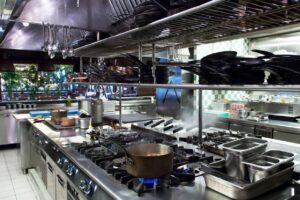
Kitchen Layout & Workflow
Your equipment choices should match your kitchen’s flow, not the other way around.
Smart restaurateurs design their kitchens in distinct zones: prep, cooking, plating, storage, and dishwashing. Equipment placement affects everything from ticket times to staff safety. For example, positioning your wok station next to your plating area reduces the distance hot food travels, keeping dishes at proper serving temperature—crucial in Singapore’s tropical climate where food temperature control is paramount.
The best restaurant kitchen equipment layouts follow the “kitchen work triangle” principle adapted for commercial use. Separate cold prep from hot cooking lines. Keep dishwashing stations away from food assembly areas. These seemingly small decisions can save your team thousands of steps per shift in Singapore’s characteristically compact kitchen spaces.
Durability & Energy Efficiency
Here’s where many new restaurant owners make costly mistakes: they buy based on upfront price rather than long-term value.
Singapore’s commercial kitchens operate in challenging conditions—high humidity, temperatures exceeding 30°C year-round, and equipment running 10-12 hours daily. Investing in commercial-grade, energy-efficient appliances pays off through lower utility bills and fewer breakdowns. According to the National Environment Agency (NEA), energy-efficient commercial kitchen equipment can reduce electricity costs by 15-35% compared to standard models—a significant saving given Singapore’s commercial electricity rates.
A quality commercial refrigerator might cost SGD $4,000–$6,000 more upfront than a cheaper model, but it will outlast three residential units while using significantly less electricity. With Singapore’s focus on sustainability and the push toward net-zero emissions, choosing energy-efficient equipment also positions your restaurant favorably for future green incentives.
Compliance & Safety Standards
The Singapore Food Agency doesn’t negotiate, and neither should you when it comes to safety standards.
Your equipment must comply with SFA’s licensing requirements, NEA regulations, and workplace safety standards. Stainless steel prep tables aren’t just trendy—they’re required because they’re non-porous and easy to sanitize in Singapore’s humid environment where bacteria can thrive.
When buying restaurant equipment, verify that items meet Singapore Safety Standards (SS) or internationally recognized certifications. Check with SFA’s guidelines for jurisdiction-specific requirements in Singapore. Fire suppression systems, ventilation hoods, and gas connections all need professional installation and regular inspections by licensed contractors. Cutting corners here can result in failed inspections, fines, or worse—license revocation.
Commercial Kitchen Equipment Checklist: Category Breakdown
Here’s your comprehensive equipment guide for Singapore restaurants, organized by kitchen zone:
Cooking Equipment
- Commercial ranges (gas or electric—verify gas connection availability)
- Combi ovens or convection ovens
- Wok ranges (essential for many Asian cuisines/concepts)
- Griddles and flattops
- Deep fryers
- Charbroilers or grills
- Steam kettles (for soups, stocks, laksa)
- Salamander broilers
Refrigeration & Storage
- Walk-in coolers/freezers (properly insulated for tropical climate)
- Reach-in refrigerators
- Under-counter refrigeration units
- Prep tables with refrigerated drawers
- Ice machines (high-capacity for Singapore’s climate)
- Shelving units (rust-resistant for humidity)
Food Preparation Equipment
- Commercial mixers (20-60 qt capacity)
- Food processors
- Meat slicers
- Vegetable choppers
- Mandolins and prep tools
- Commercial blenders
- Rice cookers (commercial-grade for Asian concepts)
Dishwashing & Cleaning
- Commercial dishwashers (high-temp models preferred for Singapore standards)
- Three-compartment sinks
- Hand-washing stations (mandatory per SFA requirements)
- Mop sinks
- Sanitizing equipment
- Cleaning supply storage (must be separate from food areas)
Holding & Serving Equipment
- Hot holding cabinets
- Steam tables
- Heat lamps
- Warming drawers
- Soup warmers
- Chafing dishes (for buffet or holding service)
Smallwares & Essential Tools
- Commercial cookware (woks, pots, pans, sheet trays)
- Chef’s knives and safe knife storage (e.g., magnetic strips, blocks)
- Cutting boards (color-coded sets per HACCP standards)
- Measuring tools and calibration thermometers
- Storage containers with tight-sealing lids (critical in humid conditions)
- Serving utensils and platters
This list covers essential kitchen appliances for most full-service restaurants in Singapore. While your specific needs will vary—a zi char stall needs different commercial ovens than a Japanese omakase counter—this framework ensures you don’t overlook fundamentals.
How a Commercial Kitchen Equipment Checklist Impacts Your Restaurant

The right equipment doesn’t just cook food—it shapes your entire operation in Singapore’s competitive F&B scene.
Time savings compound quickly. When your line cooks have properly placed professional kitchen tools within arm’s reach, they work faster and make fewer mistakes. A poorly equipped kitchen forces staff to improvise, leading to inconsistent food quality and frustrated employees—especially problematic when labor costs in Singapore remain high.
Cost control matters from day one. Singapore restaurants typically allocate 25-35% of their startup budget to kitchen equipment. A detailed checklist prevents impulse purchases and helps you identify where to invest heavily (in your primary cooking equipment) versus where you can start modest and upgrade later (on some specialty items).
Proper equipment planning directly correlates with first-year survival rates. Restaurants that systematically plan their equipment purchases report 40% fewer operational disruptions in their crucial first six months—particularly important in Singapore where rental costs make any downtime expensive.
Your dishwashing systems and refrigeration units might seem less glamorous than a shiny new range, but they’re equally critical. A broken dishwasher during Saturday dinner service will shut you down faster than any other single equipment failure, and in Singapore’s heat, a failed refrigeration unit can mean thousands in lost inventory within hours.
Benefits of Having a Restaurant Equipment Checklist
Beyond avoiding catastrophic oversights, a solid equipment checklist delivers measurable advantages in Singapore’s market:
Budget predictability: No surprise SGD $20,000 equipment purchases three weeks before opening. You’ll know exactly what everything costs and can prioritize accordingly—crucial when securing financing from Singapore banks.
Improved planning: Understanding your equipment needs informs your kitchen layout, electrical load requirements (important for Singapore’s building codes), and ventilation specifications. Your contractor can’t bid accurately without knowing what equipment you’re installing.
Energy efficiency: By researching food preparation equipment options upfront, you can choose models with better energy ratings, reducing monthly utility costs by hundreds of dollars. Consider applying for NEA’s Energy Efficiency Fund to offset costs of energy-efficient equipment.
Reduced downtime: Buying quality commercial appliances with good warranties means fewer breakdowns. In Singapore, having service contracts with local technicians means same-day repairs instead of multi-day shutdowns waiting for imported parts.
Consistent quality: Proper equipment helps your kitchen team deliver the same quality dish whether it’s Tuesday lunch or Saturday night rush. Temperature control, timing precision, and capacity all depend on having the right tools—especially important for maintaining food safety in tropical conditions.
Staff satisfaction: Professional cooks want to work in well-equipped kitchens. Given Singapore’s tight labor market and the challenge of retaining skilled kitchen staff, quality equipment shows you’re serious about supporting your team’s success.
Common Mistakes to Avoid When Creating Your Checklist

Even experienced restaurateurs in Singapore make these equipment planning errors:
Underestimating refrigeration needs: Singapore’s tropical climate means you need more refrigeration capacity than temperate countries. Don’t skimp on cold storage—food spoilage happens rapidly in humid, warm conditions.
Ignoring voltage and electrical capacity: Ensure your premises can handle the electrical load. Many older Singapore shophouses have limited electrical capacity that may require costly upgrades for commercial equipment.
Forgetting smallwares: Everyone budgets for the big-ticket items, then realizes they forgot sheet pans, mixing bowls, and utensils. Allocate 10-15% of your equipment budget for smallwares and tools.
Ignoring energy costs: That used fryer might save SGD $3,000 upfront, but it will cost an extra SGD $200 monthly in electricity. Run the lifetime cost calculation, not just the purchase price—especially since electricity isn’t cheap in Singapore.
Buying residential equipment: Your home mixer won’t survive commercial use. Commercial-grade equipment is engineered for continuous use, proper certifications, and serviceability. Don’t learn this lesson the expensive way.
Overlooking humidity-resistant features: Standard equipment may rust quickly in Singapore’s humid environment. Invest in stainless steel and rust-resistant components for longevity.
Skipping warranties and service agreements: Equipment will break. Having service contracts with local technicians means quick repairs. Verify that the supplier has Singapore-based service support—international shipping for parts takes weeks.
Step-by-Step Guide to Building Your Own Checklist
Step 1 – Assess Your Menu & Volume Needs
Your menu dictates everything. A hawker-style chicken rice stall needs different equipment than a modern European bistro.
List every menu item, then identify what equipment each dish requires. A bakery absolutely needs commercial mixers, proofers, and deck ovens. A zi char operation needs multiple wok burners and high-BTU ranges. Be specific about capacity—will you serve 100 covers per service or 300?
Step 2 – Plan Kitchen Zones
Divide your kitchen into functional areas: cold prep, hot line, plating, dishwashing, and dry storage.
Sketch your kitchen layout (even roughly) and assign equipment to zones. This prevents discovering too late that your floor plan can’t accommodate the walk-in cooler you need. In Singapore’s typically compact commercial spaces, efficient layout is critical. Consider workflow—ingredients should flow logically from receiving, to storage, to prep, to cooking, and finally to plating.
Step 3 – Research Brands & Local Service Support in Singapore
Not all commercial equipment brands are equal, and local service availability matters immensely in Singapore.
Choose manufacturers with strong reputations and Singapore-based service centers. Ask other restaurant owners what brands they trust and which suppliers provide reliable after-sales support. Popular commercial equipment suppliers in Singapore include Chop Hup Huat, Soon Lee, and Kitchen Culture Professional. Verify that local technicians can service the brands you’re considering—a great oven from an obscure brand becomes a liability when you’re waiting weeks for imported replacement parts.
Compare warranty terms carefully and factor in local service contracts. Some suppliers offer excellent on-site support; others provide minimal assistance. Choose suppliers who understand SFA requirements and can provide compliance documentation.
FAQs About Commercial Kitchen Equipment in Singapore

What equipment is essential for a small restaurant kitchen in Singapore?
For small operations, prioritize these core items: a commercial range or cooktop, reach-in refrigerator and freezer (sized appropriately for tropical climate), stainless steel prep table, three-compartment sink, commercial dishwasher, and basic smallwares (pots, pans, knives). Your specific menu will determine additional needs, but these fundamentals support most concepts and meet SFA requirements.
How much should I budget for commercial kitchen equipment in Singapore?
Plan to spend SGD $60,000–$180,000 for a complete kitchen setup, depending on restaurant size and concept. Quick-service operations might manage with SGD $50,000–$70,000, while full-service restaurants often invest SGD $120,000–$250,000 or more. Fine dining establishments with specialized equipment can exceed SGD $350,000. Factor in Singapore’s GST and potential import duties for specialty equipment.
Can I lease commercial kitchen equipment in Singapore instead of buying?
Yes, several Singapore suppliers offer leasing options that reduce upfront costs and preserve working capital. However, you’ll pay more over time through interest. Leasing makes sense for expensive items like combi ovens and walk-in refrigeration, especially if you’re conserving startup capital. Consider buying smallwares and less expensive items outright.
How do I ensure my equipment meets Singapore compliance standards?
Purchase only commercial-grade equipment bearing appropriate safety certifications (Singapore Safety Mark, CE, or UL approval). Consult SFA’s licensing guidelines before buying. Work with reputable Singapore-based dealers who understand local food service regulations. When in doubt, ask your SFA inspector during preliminary consultations—they’d rather advise you before installation than cite violations later.
Should I buy new or used equipment in Singapore?
Quality used equipment can save 40-60% compared to new, but inspect carefully—especially for signs of rust or moisture damage common in Singapore’s climate. Used ovens, ranges, and refrigeration units often provide good value if well-maintained. However, for critical refrigeration equipment, consider new units with full warranties given Singapore’s climate demands on cooling systems. Buy from reputable used equipment dealers who offer some warranty coverage.
Conclusion
Building a comprehensive commercial kitchen equipment checklist is one of the most important steps in restaurant planning for Singapore’s competitive F&B market. It protects you from expensive oversights, helps allocate your budget wisely, and ensures your kitchen can deliver consistent quality from opening day forward—while meeting SFA’s stringent requirements.
The restaurants that thrive in Singapore aren’t necessarily those with the fanciest equipment—they’re the ones with the right equipment, properly maintained and strategically chosen to support their specific concept, workflow, and Singapore’s unique operating conditions.
Don’t rush this process. Take time to research, compare options, and plan thoroughly. Your future self, standing in a smoothly running kitchen during your first busy service, will thank you.