
Why Industrial Oven Pricing Often Surprises First-Time Buyers
The Common Assumption: “The Oven Price Is the Total Cost”
Buying your first industrial oven is a milestone, but focusing only on the sticker price can lead to a “budget shock” that stalls your bakery’s opening or restaurant launch. Most business owners approach their first industrial oven purchase focused on a single number: the equipment price. A supplier quotes $8,000 for a deck oven, and the buyer assumes that’s the investment required.
This assumption creates a critical gap. The quoted price covers only the oven itself, not the infrastructure needed to run it, install it safely, or comply with Singapore’s strict food safety and building standards.
Real-World Scenario: When an $8,000 Oven Turns Into a $20,000 Project
A bakery owner in Jurong receives a quote for a mid-range convection oven at $9,500. Six months later, after electrical upgrades, gas line installation, ventilation system modifications, and compliance inspections by the National Environment Agency (NEA) and Singapore Civil Defence Force (SCDF), the total project cost reaches $22,000.
What actually happened:
- Oven equipment: $9,500
- Electrical supply upgrade: $3,200
- Gas line installation and certification: $2,800
- Commercial ventilation and exhaust system: $4,500
- Fire safety compliance and inspection fees: $1,500
- Installation labor and site preparation: $900
Total: $22,000 (more than double the equipment price)
This isn’t unusual. Many businesses discover that infrastructure and compliance costs equal or exceed the equipment cost itself.
Why Budget Planning Matters More Than the Initial Price
Understanding the true cost structure prevents financial surprises, ensures compliance with local regulations, and helps you select equipment that actually works within your kitchen constraints. Proper budgeting also reveals whether the investment delivers the production capacity you need.
What Determines the Industrial Oven Price in Singapore
Oven Capacity and Production Volume
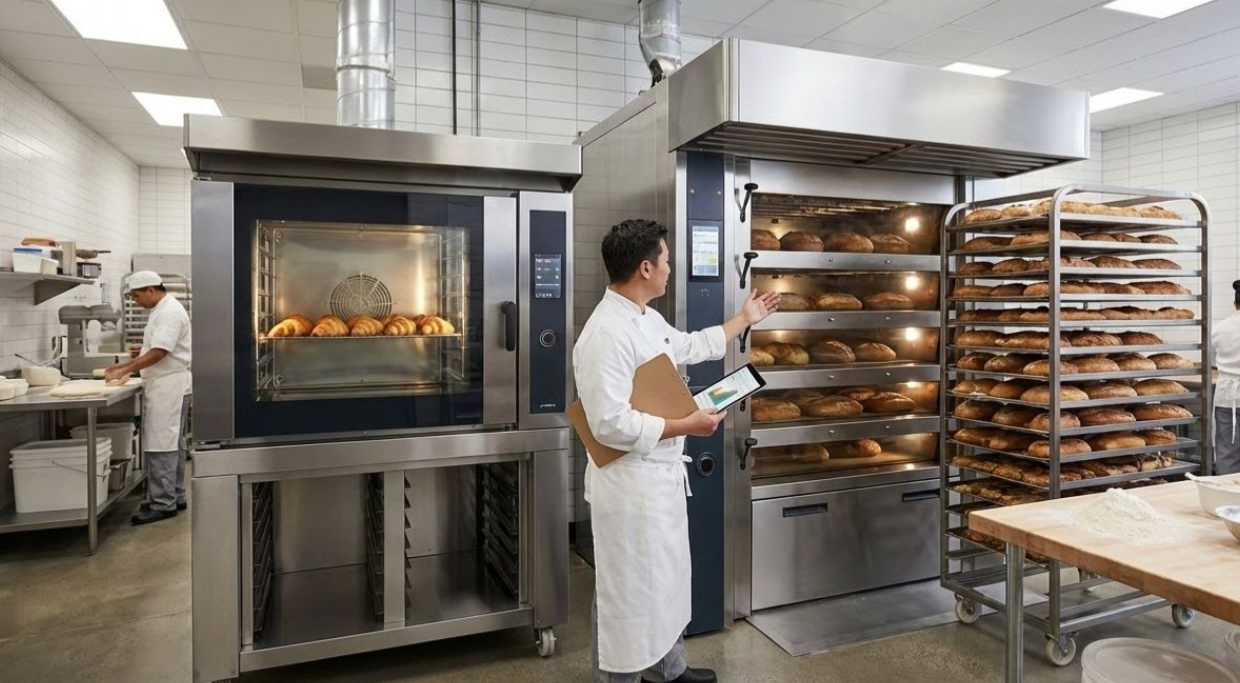
Larger capacity ovens command higher prices because they cost more to manufacture and require heavier-duty components. A small rack oven producing 50 trays per hour differs fundamentally from a large rack oven producing 150 trays per hour. Your production volume directly determines which capacity tier makes sense financially. Oversizing costs more upfront and consumes more energy. Undersizing forces you to replace equipment within 2–3 years as your business grows.
Heating Technology and Energy Source
- Electric industrial ovens are common in Singapore kitchens where gas isn’t available or desired. They typically range from $6,000 to $16,000 depending on capacity and automation level. Electric ovens require significant electrical infrastructure upgrades.
- Gas industrial ovens offer faster heat recovery and lower per-unit operating costs. Prices range from $7,000 to $20,000 depending on size and features. Gas ovens require certified gas line installation and ongoing safety compliance. Read this to understand Commercial Gas vs Electric Ovens: Which Is Better?
- Hybrid or high-efficiency systems combine technologies for energy optimization. These cost 20–35% more than standard models but reduce long-term utility bills in high-volume production environments.
Build Quality and Materials
Stainless steel construction costs more than powder-coated mild steel but lasts longer in humid commercial environments. Better insulation (typically 50–75mm) reduces heat loss and energy consumption but adds $1,500–$3,000 to the purchase price. Higher-grade stainless steel (304 vs. 201) resists corrosion better, critical in Singapore’s tropical climate.
Temperature Control Systems and Automation
Basic thermostatic controls cost significantly less but require manual monitoring. Digital programmable systems allow preset cooking profiles, reducing operator error and improving consistency. Smart monitoring systems with remote diagnostics cost more upfront but reduce downtime and maintenance guesswork.
Brand Reputation, Warranty, and Manufacturing Standards
Established brands typically offer 2–5 year warranties and accessible spare parts in Singapore. Lesser-known brands may cost 15–25% less but risk longer repair times and limited local support.
Typical Industrial Oven Price Ranges in Singapore
Entry-Level Industrial Ovens
Small deck ovens and compact convection ovens typically range from $5,500 to $9,000. These suit bakeries, small cafés, and restaurants with limited space or moderate production needs (20–40 trays per hour).
Mid-Range Production Ovens
Standard deck ovens, convection ovens, and single-rack ovens range from $9,000 to $15,000. This category serves most established restaurants, bakeries, and small commercial kitchens with moderate-to-good production demands.
High-Capacity Industrial Ovens
Large rack ovens, conveyor ovens, and advanced systems range from $15,000 to $35,000+. These support high-volume production in central kitchens, manufacturing facilities, and franchise operations.
Why Two Ovens With Similar Capacity Can Have Very Different Prices
Two ovens with identical tray capacity might differ by $3,000–$5,000 due to:
- Build materials (stainless steel grade, insulation thickness)
- Control systems (basic vs. programmable vs. smart)
- Brand and warranty support
- Manufacturing country and local service availability
- Energy efficiency certifications (some justify premium pricing with operational savings)
| Oven Type | Typical Capacity | Price Range (SGD) | Best For |
| Deck Oven | 20–40 trays/hr | $6,500–$11,000 | Traditional baking, artisan bakeries |
| Convection Oven | 30–60 trays/hr | $7,500–$14,000 | Restaurants, pastry shops, versatile cooking |
| Rack Oven | 50–150 trays/hr | $11,000–$20,000 | High-volume bakeries, central kitchens |
| Conveyor Oven | 100–300+ units/hr | $18,000–$40,000+ | Industrial production, continuous operations |
Hidden Costs That Significantly Affect Your Total Budget
Installation and Site Preparation Costs
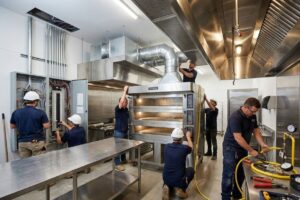
Electrical upgrades are mandatory if your current supply doesn’t support the oven’s power requirements. A 20kW commercial oven may require a new distribution board and dedicated circuit, costing $2,500–$4,500. Gas line installation must comply with Singapore’s safety standards and requires certification by a licensed contractor. Expect $2,000–$3,500 for supply line routing, pressure testing, and inspection.
Ventilation and exhaust systems are non-negotiable in Singapore. NEA regulations require commercial kitchens to manage heat and odor through proper hood and ductwork systems. Installation typically costs $3,500–$6,000 depending on kitchen size and existing infrastructure.
Kitchen Layout Modifications
Many kitchens require structural adjustments: reinforced flooring for heavy equipment, heat-resistant counter surfaces, and space reconfiguration to accommodate the oven and work areas. Budget $1,500–$3,000 for these modifications.
Delivery, Rigging, and Equipment Handling
Moving heavy equipment into a commercial kitchen often requires specialized rigging equipment, particularly in multi-story buildings. Delivery and installation labor typically cost $800–$1,500.
Compliance and Safety Certification
Singapore Food Agency (SFA) compliance inspections, fire safety certifications (SCDF), and commercial kitchen standards (BCA) involve inspection fees and any remedial work they may require. Budget $1,000–$2,000 for full compliance sign-off.
Operating Costs Buyers Often Overlook
Energy Consumption and Utility Costs
Industrial ovens consume significant electricity or gas. A mid-range electric oven might draw 15–20kW, adding $400–$600 monthly to energy bills during peak production. Gas ovens typically cost 20–30% less to operate per cooking cycle but require ongoing safety inspections.
Maintenance and Servicing
Regular maintenance prevents costly breakdowns. Component replacements (heating elements, seals, thermostats) cost $500–$2,000 annually depending on usage. Professional servicing contracts run $1,200–$2,500 yearly for high-volume operations.
Downtime Risks and Production Impact
Equipment failure during peak service hours creates cascading problems: missed orders, customer dissatisfaction, and lost revenue. A single day of downtime can cost a busy bakery or restaurant $1,500–$3,000 in lost sales.
Comparing Different Types of Industrial Ovens
Deck Ovens
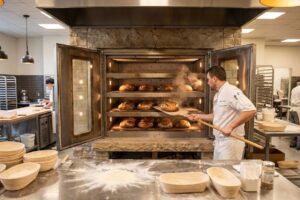
Deck ovens remain popular for artisan baking because they offer direct heat contact and excellent crust development. Prices range $6,500–$11,000. They suit lower-volume operations (20–40 trays hourly) with space constraints.
Convection Ovens
Hot air circulation cooks food evenly and faster. Convection ovens cost $7,500–$14,000 and handle 30–60 trays hourly. They’re versatile for restaurants mixing baking, roasting, and finishing dishes.
Rack Ovens
Rack ovens stack trays efficiently, maximizing production in limited floor space. Prices range $11,000–$20,000 for 50–150 tray/hour capacity. Bakeries and central kitchens rely on them for high-volume, consistent output.
Conveyor Ovens
Continuous belt systems automate high-volume production (100–300+ items hourly). Prices start at $18,000 and exceed $40,000 for advanced models. These suit industrial manufacturing and large franchise operations.
How to Estimate a Realistic Budget Before Requesting Quotes
Step 1: Define Your Production Capacity Needs
Calculate average hourly tray or unit requirements during your busiest service period. Oversizing by 20–30% accommodates peak demand without constant equipment strain.
Step 2: Identify Infrastructure Requirements
Determine your available electrical supply and gas access. Request a site assessment from potential suppliers to identify upgrades needed before equipment installation.
Step 3: Include Installation and Compliance Costs
Budget 40–60% of equipment cost for installation, ventilation, modifications, and compliance inspections.
Step 4: Factor in Operational Expenses
Project annual energy costs and maintenance. For a mid-range oven, budget $8,000–$12,000 yearly in combined energy and preventive maintenance.
Common Mistakes Businesses Make When Budgeting for Industrial Ovens

Choosing Based Only on the Lowest Price
The cheapest oven rarely delivers the lowest total cost of ownership. Poor build quality leads to frequent repairs, higher energy consumption, and shorter lifespan. A $2,000 premium for better insulation and brand support often saves $15,000+ over five years.
Ignoring Kitchen Infrastructure Limitations
Purchasing an oven without verifying electrical capacity, gas availability, or ventilation space creates installation delays and hidden costs. Always confirm infrastructure compatibility before committing.
Underestimating Maintenance Costs
Skipping regular maintenance to save money invites expensive emergency repairs. A $500 annual service contract prevents $3,000–$5,000 replacement costs.
Buying an Oven That Cannot Scale With Business Growth
An oven that barely meets today’s capacity becomes a bottleneck within 18–24 months if your business grows. Select capacity with modest growth headroom built in.
Questions Buyers Should Ask Suppliers Before Purchasing
- What is included in the quoted price?
- Does it cover delivery, installation, and site preparation?
- What are the power and ventilation requirements?
- Clarify exact specifications to confirm kitchen compatibility.
- What maintenance support is available?
- Are spare parts readily available in Singapore?
- What is the expected lifespan of the oven?
- What does the warranty cover?
- Are service technicians accessible locally?
- Long repair waits create operational disruption.
How Supplier Expertise Can Influence the Total Project Cost
Experienced suppliers evaluate your production workflow, kitchen constraints, and growth trajectory before recommending equipment. They identify hidden infrastructure issues early, preventing expensive surprises during installation. Industry suppliers such as Jackie’s Enterprises Singapore typically work with commercial kitchens to assess equipment capacity, installation needs, and operational workflow before finalizing specifications. This consultation prevents mismatches between equipment capability and kitchen reality. Professional kitchen planning consultation costs $500–$1,500 upfront but often prevents $5,000–$10,000 in wasted spending through poor equipment selection.
Industrial Oven Buying Checklist for Singapore Businesses
- Capacity and Production Needs:
- Does the oven handle peak-hour volume with 20–30% headroom?
- Infrastructure Compatibility:
- Does your kitchen support required power, gas, and ventilation?
- Energy Efficiency:
- Does the oven’s efficiency justify any premium pricing?
- Maintenance and Service Availability:
- Are local technicians and spare parts accessible?
- Compliance With Local Safety Standards:
- Does the equipment meet SFA, NEA, SCDF, and BCA requirements?
Conclusion
Industrial oven price is only the starting point of your investment. Capacity requirements, heating technology, build quality, installation complexity, and ongoing operational costs together determine true project expense. Businesses that calculate total cost of ownership, not just purchase price, avoid costly surprises and select equipment aligned with both production needs and financial reality. Proper planning means choosing an oven that supports sustainable growth while remaining operationally efficient for years ahead.