

Why Relocating Commercial Kitchen Equipment Is More Complex Than It Looks
Moving kitchen equipment requires safely disconnecting electrical, gas, water, and ventilation systems while protecting machinery that must perform at exact specifications when service resumes.
The Hidden Risks of Moving Heavy Kitchen Assets
Commercial ovens weigh 500–3,000 lbs (~225–1,360 kg); walk-in freezers exceed 10,000 lbs (~4,500 kg). Interior components can shift, creating misalignment that destroys functionality.
Why Improper Relocation Can Shut Down Operations
Improper electrical disconnection damages control panels. Gas lines require licensed technicians. Calibration losses require expensive recalibration.
Real-World Scenario
A restaurant relocated a deck oven with borrowed dollies. Within a week, one heating zone failed from component shifting. Repairs cost $3,800 and a week of downtime.
What Counts as Heavy Commercial Kitchen Equipment
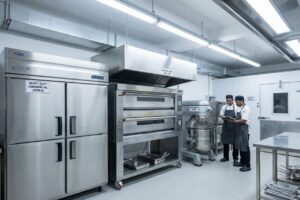
Understanding what you’re moving is the foundation of safe planning. Singapore’s multicultural kitchen environment often requires multiple equipment types.
Cooking Equipment
Industrial ovens weigh 500–3,000 lbs (~225–1,360 kg). Fryers weigh 300–1,500 lbs (~135–680 kg) when empty. Griddles and ranges weigh 400–800 lbs (~180–365 kg) and are prone to tipping.
Refrigeration Systems
Walk-in chillers and freezers weigh 5,000–15,000 lbs (~2,270–6,800 kg) and contain EPA-regulated refrigerant systems. Under-counter units (300–600 lbs / ~135–270 kg) require careful compressor protection.
Food Production Equipment
Dough mixers (600–1,200 lbs / ~270–545 kg) have rotating components that must be locked. Slicers and processors have precision blade systems vulnerable to misalignment.
Ventilation and Exhaust Systems
Hood systems and ductwork require careful disconnection to maintain effectiveness in humid Singapore kitchens.
When Businesses Need to Move Commercial Kitchen Equipment
Restaurant Relocation
Moving to a new building requires coordinated utility disconnections and reconnections.
Kitchen Renovations or Layout Optimization
Mid-project moves create the highest complexity with limited downtime windows.
Expansion Into Central Kitchens
Multi-location restaurants consolidate production, requiring precision reconnection.
Equipment Replacement or Upgrading
Old equipment must be safely removed while new equipment is positioned and tested.
Planning a Safe Kitchen Equipment Relocation
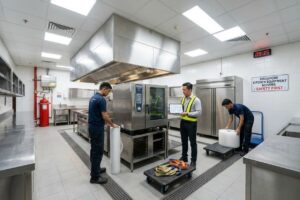
Step 1: Conduct a Full Equipment Inventory
Document every piece: make, model, weight, age, and condition. This baseline helps identify relocation-related damage. If you purchased from Jackie’s, your equipment documentation includes weight and dimension specifications, use these as your planning reference.
Step 2: Evaluate Equipment Weight and Dimensions
Record exact measurements and weight using manufacturer documentation.
Step 3: Map the Moving Path
Measure doorways, corridors, and elevator dimensions.
⚠️ Critical for Singapore: Verify floor load capacity. HDB and URA regulations specify maximum floor loads (typically 5 kN/m²). Engage a structural engineer if repositioning equipment over 1,000 lbs (~450 kg).
Step 4: Schedule the Move to Reduce Operational Downtime
Plan moves during minimal service hours. Coordinate with utility companies to prevent delays.
Preparing Equipment Before Moving
Disconnecting Electrical Systems Safely
Turn off power at the breaker panel and document configuration. A licensed electrician should disconnect hardwired equipment for code compliance.
Handling Gas Lines and Fuel Connections
Gas lines require SCDF-certified technicians to ensure compliance with Singapore fire safety codes. Take photos of all connection points before disconnection.
Draining Fluids and Cleaning Equipment
Drain cooking oil, water, and refrigerant. Complete this 24 hours before movement to allow surfaces to dry. Disposal must comply with NEA guidelines.
Securing Internal Components
Remove or lock internal components: racks, shelves, baskets. Pack separately to prevent loss.
Protecting Stainless Steel Surfaces
Wrap exterior stainless steel with moving blankets and painter’s tape to prevent scratching.
Tools and Equipment Used for Moving Heavy Kitchen Assets
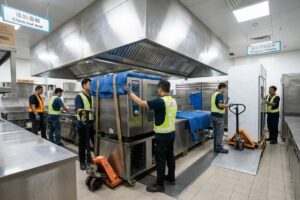
Heavy-Duty Equipment Dollies (1,500+ lbs / ~680 kg capacity) are essential. Pallet Jacks and Industrial Trolleys work best for longer distances. Lift Gates and Hydraulic Platforms manage elevation changes safely. Protective Padding prevents surface damage and reduces noise.
Safety Risks When Moving Commercial Kitchen Equipment
- Worker Injury and Lifting Hazards are immediate risks. Equipment over 150 lbs (~68 kg) requires mechanical assistance.
- Equipment Structural Damage occurs with improper weight distribution. Compressors and electronics are vulnerable.
- Electrical and Gas Connection Failures create safety hazards or performance issues.
- Flooring and Structural Damage result from inadequate surfaces.
Why Professional Equipment Movers Are Often Necessary
Specialized movers understand the structural and system complexities unique to Singapore commercial kitchens. They recognize equipment-specific risks that first-time movers miss and know how to safely disconnect and reconnect gas, electrical, and ventilation systems with SCDF-certified specialists.
Their experience means they position items correctly to prevent structural damage and ensure proper alignment. They understand HDB/URA floor load calculations and identify when reinforcement is needed.
Jackie’s Role: When you purchase equipment from Jackie’s Enterprises, you’re buying from suppliers who understand commercial kitchen operations. Jackie’s can advise on proper installation requirements and help you plan professional installation if needed.
Rearranging Kitchen Equipment for Better Workflow
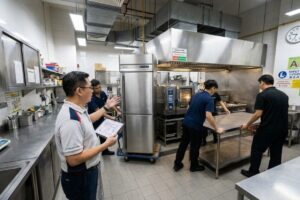
Efficient layout design reduces staff movement and improves service speed. Proper ventilation requires adequate clearance above cooking equipment. Safety standards specify distances between equipment types. Relocation planning that incorporates these standards creates safer kitchens that are easier to maintain and comply with local regulations.
Common Mistakes Businesses Make When Moving Kitchen Equipment
- Underestimating Equipment Weight leads to improper handling and worker injury. Always confirm actual weight before planning.
- Moving Without Proper Disconnection destroys electrical and gas systems. Equipment must be fully disconnected first.
- Ignoring Floor Load Limits creates long-term structural damage.
- Attempting DIY Moves Without Equipment is costly, money saved returns tenfold in repairs and downtime.
⚠️ Warranty Protection: Improper equipment handling during installation or relocation may void manufacturer warranties. When you purchase from Jackie’s, ask about installation guidelines to ensure your warranty remains valid. Many equipment manufacturers require professional installation or specific handling procedures, Jackie’s can provide these specifications when you order.
Cost Factors Involved in Moving Commercial Kitchen Equipment
Equipment Size and Weight directly influence costs. A 500-lb (~225 kg) fryer costs less to move than a 5,000-lb (~2,270 kg) walk-in freezer.
Distance and Complexity vary significantly. Disconnecting refrigerants and coordinating licensed specialists costs far more than simple electrical disconnection.
Access Constraints (stairs, elevators, narrow corridors) require specialized equipment and increase labor costs.
Checklist for Safely Moving Commercial Kitchen Equipment
| Task | Status | Notes |
| Equipment inventory completed (make, model, weight, condition documented) | ☐ | Baseline for damage assessment |
| Equipment weight and dimensions verified with manufacturer specs | ☐ | Confirms dolly and equipment selection |
| Moving route mapped and measured (doorways, corridors, elevators, elevation changes) | ☐ | Identifies obstacles or access issues |
| Floor load capacity verified in both locations | ☐ | Prevents structural damage |
| Utilities disconnected by licensed professionals (electrical, gas, water) | ☐ | Safety and code compliance |
| Fluids drained and equipment cleaned | ☐ | Reduces weight and prevents spills |
| Internal components secured or removed and packed separately | ☐ | Prevents internal damage and loss |
| Stainless steel surfaces protected with moving blankets | ☐ | Preserves appearance |
| Heavy-duty dollies and lifting equipment selected and ready | ☐ | Match equipment weight and dimensions |
| Professional movers or specialists confirmed and scheduled | ☐ | Expertise reduces risk |
| Reconnection plan documented with photos of all connection points | ☐ | Guides proper reassembly |
| Licensed technicians scheduled for utility reconnection | ☐ | Ensures code compliance and safety |
| Post-move equipment testing scheduled | ☐ | Confirms functionality before service resumes |
Conclusion
Relocating commercial kitchen equipment requires careful planning, safe utility disconnection, proper handling equipment, and understanding kitchen infrastructure and safety standards.
Businesses that approach relocation systematically protect their equipment, avoid costly downtime, and ensure smooth kitchen operations after the move. Professional expertise costs far less than emergency repairs and extended downtime.
If You’ve Purchased from Jackie’s
Your equipment deserves proper installation from the start. When ordering from Jackie’s Enterprises, request detailed installation and handling specifications for your equipment. Jackie’s team can clarify weight limits, floor requirements, electrical/gas specifications, and approved methods to keep your warranty protected and equipment operating efficiently. The difference between smooth installation and costly disaster is planning before equipment arrives.