

The Hidden Limits of Manual Mixing in Growing Bakeries
Why Manual Mixing Works for Small Batch Production
For small bakeries producing 20–50 loaves or cakes per day, manual mixing is often sufficient. Hand-mixing, stand mixers, or small commercial units meet capacity needs without significant capital investment. The process is flexible, requires minimal floor space, and gives bakers direct control over texture and ingredient incorporation. Manual methods work well because production volumes stay manageable. Batches are small enough that a single operator can complete mixing, fermentation, and shaping within standard workflow windows. There’s also a tactile advantage,experienced bakers can feel dough development and adjust hydration or mixing time by hand, which some artisanal producers prefer.
The Point Where Production Demand Starts to Outgrow Manual Prep
As orders grow, cracks appear. When a bakery increases output to 100+ units daily, manual mixing becomes a production bottleneck. A single mixer operator becomes a limiting factor. What used to take 30 minutes per batch now requires 45 minutes or more because larger quantities mix slowly in standard equipment. Consistency problems emerge too. Different batches of the same dough vary in gluten development, hydration, or mixing time depending on operator technique or fatigue. This inconsistency compounds into uneven rise, crust quality, and final product performance.
Real-World Scenario: When Increased Orders Create Kitchen Bottlenecks
A bakery growing from wholesale orders jumps from 50 daily units to 150. The mixing station, which was adequate, now becomes a choke point. Dough doesn’t finish mixing until late morning, pushing fermentation schedules later. Bakers rush through other tasks or extend hours to compensate. Staff fatigue increases, quality drops, and the kitchen feels chaotic rather than efficient. This is the critical moment when scaling falters,not because the bakery can’t produce more, but because the workflow system wasn’t designed for it.
What Is a Planetary Mixer and How It Works
The Basic Mechanics of Planetary Mixing
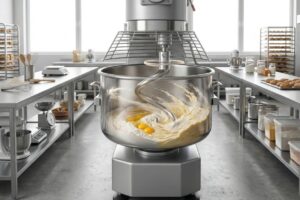
A planetary mixer uses a large rotating bowl combined with an agitator that moves in a planetary motion,orbiting around the bowl while rotating on its own axis. Unlike vertical mixers that primarily rotate a single attachment in a fixed position, the planetary design ensures the agitator reaches every part of the bowl simultaneously. This dual-motion system means ingredients are continuously lifted, folded, and compressed from all angles. There are no dead zones where unmixed flour or batter accumulates at the bottom or sides.
Why the “Planetary” Motion Improves Mixing Performance
The planetary motion creates uniform mixing in shorter cycles. For dough, this means gluten develops more evenly and predictably. For batters, it prevents lumps and ensures emulsification. The consistent technique produces identical results batch after batch, regardless of operator skill or attention level. Speed and power are secondary benefits. The real advantage is consistency,every batch mixes to the same degree because the machine does the same work every cycle.
Key Components of a Planetary Mixer
Mixing Bowl: Stainless steel, removable or fixed, sized to hold the batch volume.
Agitator Attachments: Typically three types,a whip (for batters and whipping cream), a flat beater (for general mixing), and a dough hook (for developing gluten). Quality mixers allow quick attachment swapping.
Motor and Speed Controls: Industrial models offer 3–12 speed settings. Lower speeds suit delicate batters; higher speeds develop dough. Variable speed gives operators flexibility without buying multiple machines.
Common Applications of Planetary Mixers in Bakeries
Dough Preparation
Bread, roll, and croissant doughs benefit most. The dough hook develops gluten in 6–8 minutes, consistently achieving the target texture required for proper fermentation and rise.
Cake Batter Mixing
Large-batch cake production requires uniform batter. Planetary mixers eliminate lumps and ensure even incorporation of leavening agents, producing consistent crumb structure.
Cream Whipping
Whipped cream, buttercream, and mousse production is faster and more stable. The whip attachment aerates cream uniformly without over-mixing or breaking.
Pastry and Filling Preparation
Pastry doughs, fillings, and icings mix faster and more reliably than by hand, reducing preparation time and human error.
Signs Your Bakery Has Outgrown Manual Mixing

Increasing Production Volume
If daily orders have doubled in the past 6–12 months and your mixing equipment is running continuously, you’ve outgrown manual capacity.
Inconsistent Dough or Batter Quality
Batches vary in texture, rise, or final appearance despite using identical recipes. Inconsistency signals that mixing technique or time is slipping.
Labor Fatigue and Workflow Inefficiencies
Staff members are tired, mixing is rushed, or scheduling conflicts force overtime. Fatigue leads to errors and lower product quality.
Longer Preparation Times Affecting Output
If mixing takes significantly longer now than it did with smaller batches, you’re losing productive hours. This directly reduces units you can produce per shift.
Production Advantages of Industrial Planetary Mixers
Faster Batch Processing
A 60-liter planetary mixer handles in 8–10 minutes what might take 25 minutes manually. This speed compounds across multiple daily batches.
Consistent Mixing Quality
Every batch mixes to identical specifications. This consistency reduces waste, improves product quality, and builds customer confidence.
Reduced Labor Requirements
One person can manage the planetary mixer while another preps ingredients or shapes products. You’re not paying someone to continuously hand-mix.
Ability to Handle Larger Batches
A single 60-liter batch replaces 3–4 manual batches, reducing total mixing cycles and preparation overhead.
Types and Sizes of Planetary Mixers
| Capacity | Typical Production | Best For | Space Required |
| 10–20L | 25–75 units/day | Small craft bakeries, specialized items | 1–1.5 sq meters |
| 30–60L | 75–200 units/day | Growing wholesale, multi-line production | 2–3 sq meters |
| 80L+ | 200+ units/day | High-volume, multiple shifts | 3+ sq meters |
Small-Capacity Mixers (10–20L)
Suitable for artisanal bakeries with production under 75 units daily. Space-efficient and affordable, but limited for growth. Often an interim step before investing in larger equipment.
Medium-Capacity Mixers (30–60L)
The sweet spot for growing bakeries producing 75–200 units daily. Balances capacity, cost, and space. Most commercial bakeries operate one or two medium-capacity units.
Large Industrial Mixers (80L and Above)
For high-volume operations, multiple production lines, or franchised bakery networks. Requires dedicated electrical infrastructure and significant floor space.
Choosing Capacity Based on Production Needs
Select capacity at 60–70% of your peak anticipated volume over the next 2–3 years. This allows for growth without overinvestment and ensures the mixer doesn’t run continuously, which reduces equipment lifespan.
Key Features to Consider When Choosing a Planetary Mixer
Motor Power and Mixing Strength
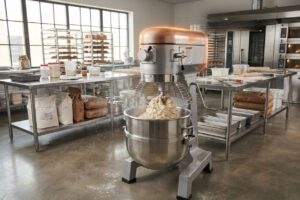
Measured in watts or horsepower, power determines how fast and how thoroughly ingredients mix. Underpowered motors struggle with stiff doughs; oversized motors waste energy on small batches.
Speed Control Options
Variable-speed models offer flexibility. Fixed-speed mixers are simpler and cheaper but limit your ability to adjust for different dough types or batter viscosities.
Bowl Capacity and Batch Size
Ensure the rated capacity aligns with your typical batch sizes. A 60-liter mixer filled to 80% capacity performs optimally; overfilled mixers strain motors.
Attachment Compatibility
Quick-release systems allow fast switching between hooks, beaters, and whips. Some commercial mixers use proprietary attachments, limiting flexibility and increasing spare part costs.
Safety Features and Durability
Look for automatic shut-offs, bowl guards, and stainless steel construction. Industrial equipment should handle daily use without degradation.
How Planetary Mixers Improve Bakery Workflow
Streamlining Ingredient Preparation
Mixing happens faster, freeing the mixing station sooner for the next batch. This creates smoother handoffs to fermentation, shaping, and proofing areas.
Reducing Staff Workload
One operator monitors the mixer while other team members handle downstream tasks. Total labor hours per unit decreases.
Maintaining Product Consistency Across Batches
Identical mixing cycles produce identical dough development, leading to uniform rise, color, and texture across all units.
Supporting Scalable Production
Once installed, a planetary mixer enables 30–50% production increases without adding headcount,until you hit the next bottleneck.
Common Mistakes When Upgrading to Industrial Mixers
Choosing a Mixer That Is Too Small for Production Growth
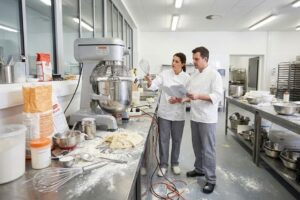
Bakeries often buy equipment matching current volume, not anticipated growth. Within 18 months, the mixer runs constantly. Plan for 2–3 years of projected growth.
Ignoring Kitchen Space and Power Requirements
A 60-liter mixer requires dedicated floor space, three-phase electrical (240V+), and proper ventilation. Installing equipment without these basics creates costly retrofitting.
Underestimating Maintenance Needs
Industrial equipment requires regular cleaning, bearing lubrication, and seal replacement. Budget for maintenance costs and spare parts inventory.
Purchasing Equipment Without Staff Training
Staff unfamiliar with the equipment often misuse it,overfilling bowls, using wrong speeds, or skipping cleaning cycles. This shortens equipment lifespan and compromises results.
Integrating Planetary Mixers Into Bakery Operations
Designing an Efficient Mixing Station
Position the mixer near ingredient storage and near the next production step (fermentation, proofing, or shaping). Minimize handoff distances to reduce fatigue and timing errors.
Coordinating Mixing With Baking Schedules
Mixing cycles must align with oven availability and fermentation timelines. If your mixer finishes a dough batch in 10 minutes but fermentation takes 2 hours, timing is misaligned. Adjust batch size or sequence to optimize flow.
Ensuring Equipment Safety and Maintenance
Establish daily cleaning protocols, monthly maintenance checks, and annual servicing. Create clear safety guidelines,bowl locks, emergency stops, and attachment storage procedures.
Commercial Kitchen Equipment Integration
Commercial kitchen equipment providers such as Jackie’s Enterprises often assist bakeries in selecting mixers that match production volume and workflow requirements. They can also provide guidance on space planning and power supply specifications.
Practical Checklist Before Investing in a Planetary Mixer
Estimate Daily Production Volume
Count units produced daily over the past 3 months. Include wholesale orders and retail sales.
Identify Required Batch Sizes
What’s the typical batch size for your most common products? This determines bowl capacity.
Confirm Available Kitchen Space
Measure floor space, ceiling height, and proximity to power sources. Ensure adequate room for operation and cleaning.
Evaluate Power Supply Requirements
Check your current electrical capacity. Most medium-capacity mixers require 208–240V, three-phase. Upgrades can be expensive.
Plan Staff Training and Maintenance
Schedule training before equipment arrives. Designate someone responsible for maintenance. Create a cleaning and service log.
Conclusion
As bakeries grow, manual mixing processes often become inefficient and limit production capacity. Industrial planetary mixers provide the power, consistency, and scalability needed to handle larger batch sizes while maintaining product quality. By understanding when to transition from manual preparation to automated mixing, bakery operators can improve workflow efficiency and support long-term production growth. The decision to upgrade isn’t about having the best equipment,it’s about removing bottlenecks that prevent you from serving more customers without sacrificing quality or burning out staff.