
Your Exhaust Hood Ventilates Smoke; It Doesn’t Automatically Stop a Fire
A clean, well-ventilated exhaust hood is often assumed to be enough for kitchen fire safety. It isn’t. Ventilation removes smoke, grease vapour, and heat from the cooking area, but it does nothing to detect or extinguish a fire once one starts. Fire suppression is a separate, mandatory system layered onto the exhaust setup, not a byproduct of good ventilation design. Understanding that distinction matters before planning a new kitchen or renovating an existing one.
Which Authority Governs What, and Where Fire Suppression Fits
Commercial kitchen exhaust systems in Singapore fall under the purview of several regulatory bodies, and it’s easy to conflate their requirements.
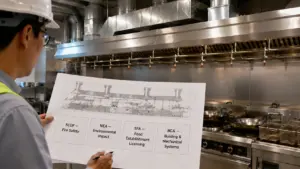
SCDF, NEA, SFA, and BCA: Different Authorities, Different Scopes
Authority | Primary Scope | Relevance to Exhaust Hoods |
SCDF | Fire safety | Fire suppression, duct construction, fire code compliance |
NEA | Environmental impact | Odour control, air discharge, grease trap requirements |
SFA | Food establishment licensing | Kitchen layout as part of the food shop licence |
BCA | Building and mechanical systems | Mechanical ventilation design standards |
This article focuses specifically on the SCDF scope: fire suppression at the exhaust hood. It doesn’t cover NEA’s environmental requirements or SFA’s licensing conditions, which are separate compliance obligations addressed elsewhere.
Where This Requirement Comes From
Kitchen exhaust fire safety is covered in the SCDF Fire Code 2023, under Chapter 7, which covers mechanical ventilation and smoke control systems, with provisions for kitchen exhaust ducts addressed in that chapter’s clauses. The Fire Code sets out detailed requirements for the design of ventilation and exhaust systems to manage fire risk. Because code editions and clause numbering are periodically revised, the exact wording of the current clause should be confirmed against the latest published Fire Code before finalising any design or renovation.
Which Kitchens This Requirement Applies To
Not every food preparation space triggers this requirement. Knowing where the line sits helps with early planning.
Open Flame and Grease-Laden Cooking as the Trigger Point
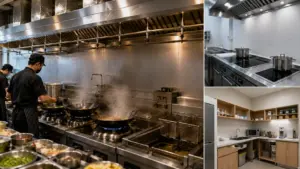
The requirement is generally tied to kitchens that produce grease-laden cooking vapour or use open-flame equipment connected to an exhaust system, rather than every space where food is handled. A busy wok station or deep fryer line clearly falls within scope. Borderline cases, such as induction-only kitchens or small pantry setups with minimal cooking, are less clear-cut and shouldn’t be assumed either way. These situations are best checked directly with a qualified fire safety professional rather than guessing from a general description.
What a Compliant Fire Suppression Setup Typically Includes
A compliant system is more than a single component. It’s a combination of suppression, detection, and safety interlocks working together.
Wet Chemical Suppression Systems
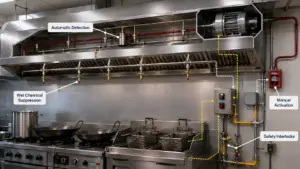
The most common approach for commercial kitchen hoods is a wet chemical system: a potassium-based agent designed to cool grease fires and prevent re-ignition, discharged through nozzles positioned over cooking equipment. Standards such as NFPA 17A set out the minimum requirements for these systems, covering their design, installation, testing, and maintenance throughout their service life. Because SCDF-accepted standards and referenced editions can change, it’s worth confirming the current requirement with a fire safety engineer rather than assuming a specific standard applies.
Detection and Activation Methods
Most compliant systems combine two activation methods: automatic detection, typically through heat-activated fusible links that trigger the system once a set temperature is reached, and manual pull stations that let staff activate suppression directly. Having both means the system can respond even if detection is delayed, while still giving staff a manual override in an emergency.
Required Safety Interlocks
When a suppression system activates, it’s generally expected to automatically cut fuel or gas and electrical supply to the cooking equipment it protects, removing the fuel source rather than relying on suppression alone. The system also needs to work correctly alongside the exhaust fan, since an active fan can pull suppressant away from the fire before it takes effect. Exact interlock sequencing varies by system design and installation, so this is an area worth confirming directly with a qualified fire safety engineer.
How Fire Suppression Fits Into the Approval Process
Fire suppression isn’t a standalone add-on approved separately from the rest of the kitchen build. It’s part of a broader submission and sign-off process.
Design Submission and Sign-Off
In general terms, fire suppression is addressed in the mechanical ventilation plan submission and reviewed alongside the broader fire safety approval for the premises. A Qualified Person or Registered Inspector is typically involved before a Fire Safety Certificate is issued. Because submission requirements can vary by project scope and premises type, it’s worth confirming the current process directly with SCDF or a qualified fire safety professional early in the planning stage, rather than assuming the same steps apply to every project.
Who Is Typically Involved in Getting This Right
Getting fire suppression right at the design stage usually involves several parties working together: mechanical ventilation contractors handling the exhaust system design, fire suppression specialists designing and installing the suppression equipment itself, and kitchen equipment fabricators who build the hood and duct system the suppression components are mounted to. Kitchen equipment suppliers involved in hood and duct fabrication, such as Jackie’s Enterprises, are one part of this broader compliance chain, though fabrication and fire suppression certification remain distinct scopes of work handled by different specialists.
Keeping a Compliant System Compliant Over Time
Passing the initial approval doesn’t mean the obligation ends there. Fire suppression compliance is an ongoing responsibility, not a one-time installation event.
Why Servicing Intervals Matter
Suppression systems are generally subject to a periodic servicing regime under the applicable design standard, and skipping this servicing can put a kitchen out of compliance even if the original installation was fully approved. Because the specific interval depends on the standard and system in use, it’s worth confirming the current requirement directly rather than assuming a fixed schedule applies universally.
Common Ways Systems Drift Out of Compliance
A few realistic, illustrative scenarios show how compliance can quietly lapse after installation: new cooking equipment added under a section of hood that wasn’t originally covered by suppression nozzles, grease buildup affecting the sensitivity of detection components, or a damaged nozzle going unnoticed until an inspection flags it. None of these requires a fire to become a compliance issue; they surface on paper long before that.
Two Misconceptions Worth Clearing Up
“My Exhaust Hood Cleaning Schedule Covers Fire Safety”
Routine grease cleaning and fire suppression servicing address separate risks, even though both relate to the same hood and duct system. Cleaning reduces the fuel available for a fire to spread through accumulated grease. Suppression servicing ensures the system that detects and extinguishes a fire is actually functional. Doing one doesn’t substitute for the other.
“A Fire Extinguisher Nearby Is Sufficient”
A portable extinguisher plays a role in kitchen fire safety, but it doesn’t replace an integrated, automatic suppression system that covers the specific risk zone above cooking equipment. A portable extinguisher depends on someone noticing the fire, reaching it in time, and using it correctly. An automatic system is designed to respond before that sequence has to happen.
What to Check Before Finalising a New or Renovated Kitchen
A few checkpoints are worth confirming before a kitchen opening date is locked in: that suppression coverage is planned alongside hood and duct construction rather than added afterward as a retrofit, that the specific standard the system is designed to has been confirmed rather than assumed, and that the sign-off timeline, including Qualified Person review, is built into the project schedule rather than treated as a final step to rush through.
Conclusion
Fire suppression at the exhaust hood is a distinct, mandatory requirement under SCDF’s Fire Code, separate from NEA’s environmental rules and SFA’s food establishment licensing. A compliant setup generally combines a wet chemical suppression system, automatic and manual activation, and safety interlocks that cut fuel and coordinate with the exhaust fan, all reviewed as part of the mechanical ventilation and fire safety approval process. Because standards, clause numbering, and servicing intervals are subject to revision, the most reliable path forward is to confirm current requirements directly with SCDF or a qualified fire safety professional before committing to a new build or renovation.