Why Cold Storage Becomes a Space Challenge in Commercial Kitchens
Cold storage is one of the most critical yet space-consuming aspects of any commercial kitchen. For restaurant owners, bakeries, and F&B operations in Singapore, finding the balance between adequate refrigeration capacity and limited floor space is a constant challenge.
Limited Floor Space in Busy Kitchen Environments
Most commercial kitchens operate in confined spaces where every square meter matters. Whether you’re working in a hawker stall, a modern restaurant kitchen, or a catering facility, expanding your footprint horizontally is rarely an option. Land costs are high, rental agreements are fixed, and renovations are expensive. This forces kitchen managers to work creatively with vertical space,something most facilities overlook.
Increasing Ingredient Storage Needs
As businesses grow, ingredient diversity increases. You need space for proteins, vegetables, sauces, dairy, prepared items, and leftovers,all requiring different temperature zones. A small under-counter unit that worked for a startup won’t cut it when you’re handling multiple daily service seatings or fulfilling catering orders.
How Inefficient Refrigeration Layouts Slow Down Kitchen Operations
Poor refrigeration placement creates workflow bottlenecks. Staff waste time hunting for ingredients, congestion builds at storage areas during service, and disorganization leads to duplicated ordering and waste. Additionally, inefficient cooling means uneven temperature zones, risking food safety compliance and product spoilage.
What an Upright Chiller Is and How It Works
The Basic Structure of Upright Refrigeration Systems
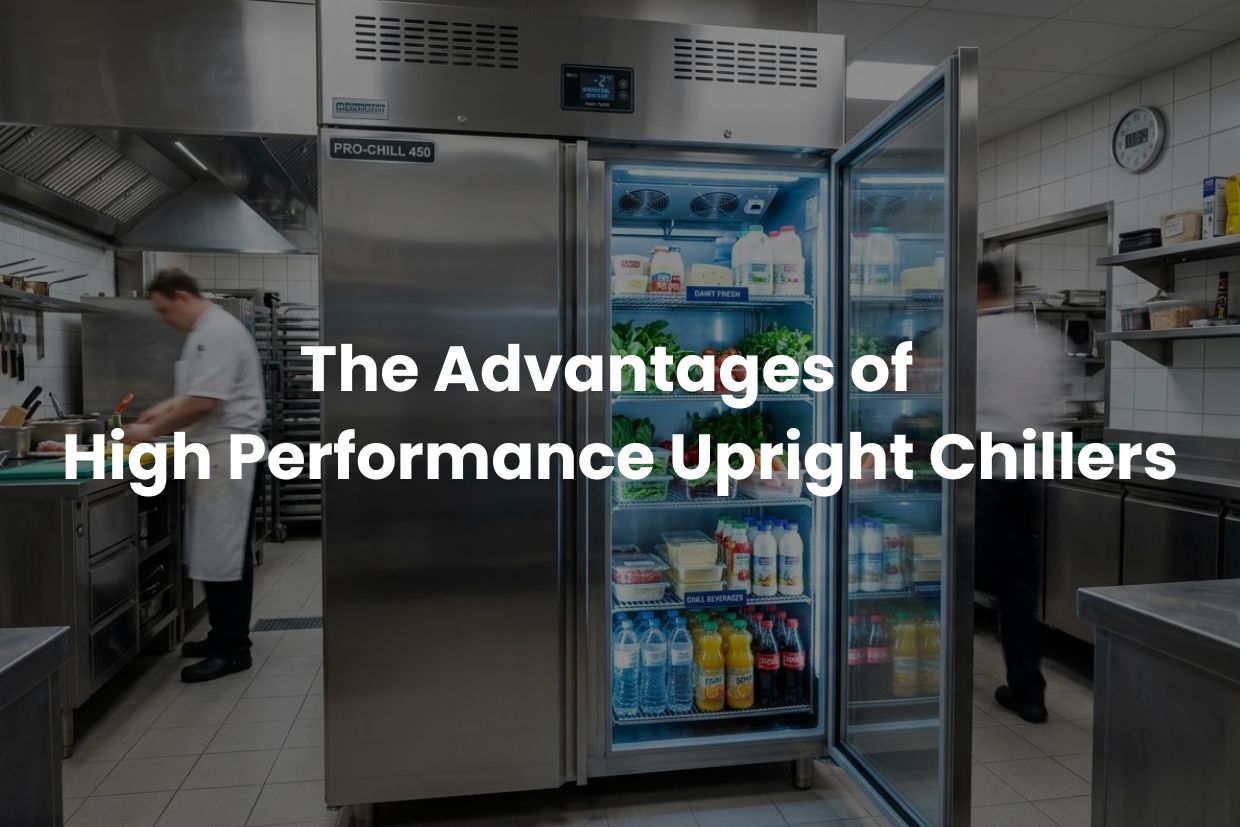
An upright chiller is a tall, vertical refrigeration unit designed to store ingredients at controlled temperatures (typically 0–4°C for chilled items). Unlike chest freezers or under-counter units, upright chillers feature a front-opening door, multiple internal shelves, and a compact footprint relative to capacity.
Vertical Storage Design Explained
The vertical design is the key advantage. By stacking shelves from floor to ceiling, upright chillers allow you to store significantly more product in the same floor area. A 600mm-wide upright unit can hold more volume than three under-counter units placed side by side,while using less space.
How Air Circulation Maintains Even Cooling
Modern upright chillers use forced-air cooling systems with vents distributed across shelves. Cold air is circulated continuously, preventing hot spots and ensuring consistent temperature throughout the unit. This is especially important in Singapore’s warm climate, where ambient temperatures can stress refrigeration systems.
Why Upright Chillers Are Ideal for Space-Constrained Kitchens
Maximizing Vertical Storage Capacity
By utilizing height, upright chillers transform typically wasted vertical space into productive storage. For businesses in compact locations,such as small restaurant chains or cloud kitchens in commercial buildings,this efficiency is transformative.
Reducing Floor Space Requirements
A single upright chiller can replace multiple under-counter units while freeing up floor space for prep tables, cooking stations, or workflow pathways. This improves kitchen ergonomics and safety.
Improving Ingredient Organization
With dedicated shelves and compartments, staff can organize ingredients by category, temperature requirement, or usage sequence. This reduces decision time during service and minimizes cross-contamination risks.
Supporting Faster Kitchen Workflow
When ingredients are easily accessible and logically arranged, prep work accelerates. Orders get filled faster, service times improve, and kitchen stress decreases,especially during peak periods.
Key Features of High-Performance Upright Chillers
Temperature Stability and Cooling Performance
Quality upright chillers maintain precise temperature control (±2°C) critical for food safety compliance with Singapore’s SFA (Singapore Food Agency) standards. Inconsistent cooling accelerates spoilage and creates compliance liability.
Energy-Efficient Compressor Systems
High-performance units use variable-speed compressors that adjust cooling output based on demand, reducing energy consumption by 15–25% compared to older models. In Singapore, where commercial electricity tariffs are substantial, this efficiency translates directly to operational cost savings.
Adjustable Shelving for Flexible Storage
Removable or height-adjustable shelves allow you to customize the unit for different ingredient types. This flexibility prevents waste when storage needs shift seasonally or with menu changes.
Durable Stainless Steel Construction
Stainless steel construction resists corrosion, handles frequent cleaning without degradation, and meets hygiene standards. It’s an investment that lasts 10+ years with proper maintenance.
Digital Temperature Monitoring
Modern units feature digital displays and, in premium models, remote monitoring and alarm alerts. This allows staff to verify conditions without opening doors and enables proactive maintenance response.
Comparing Upright Chillers With Other Refrigeration Options
| Aspect | Upright Chiller | Undercounter Refrigerator | Chest Freezer | Walk-In Fridge |
| Floor Space Used | Low (vertical storage) | Low (but limited capacity) | Medium | Very High |
| Storage Capacity | High | Low | Medium | Very High |
| Ingredient Access | Easy (front-opening) | Easy | Difficult (top-opening) | Easy |
| Temperature Control | Precise (0–4°C) | Precise (0–4°C) | Variable (-18°C+) | Precise (0–4°C) |
| Ideal For | Space-limited kitchens needing 200–400L capacity | Limited storage, high accessibility | Batch freezing, bulk storage | Large kitchens, high-volume operations |
| Installation | Plug-and-play | Plug-and-play | Minimal setup | Requires planning, ventilation |
| Cost | Moderate | Low–Moderate | Low–Moderate | High |
Summary: Upright chillers offer the best balance for small-to-medium commercial kitchens needing space efficiency without sacrificing capacity or access.
How Upright Refrigeration Improves Kitchen Workflow
Faster Ingredient Access
Front-opening doors and organized shelving eliminate the need to move items to locate what you need. During lunch or dinner service, when every second counts, this matters significantly.
Organized Storage by Food Category
Designate specific shelves for proteins, produce, dairy, and prepared items. This system prevents confusion, reduces retrieval time, and supports portion control by making stock levels visible.
Reduced Cross-Contamination Risks
Organized, dedicated storage prevents raw proteins from resting above ready-to-eat items. This supports NEA (National Environment Agency) and SCDF (Singapore Civil Defence Force) food safety inspection compliance.
Efficient Inventory Management
When ingredients are visible and organized, kitchen staff naturally track stock levels better. This reduces over-ordering, spoilage, and waste,ultimately improving profitability.
Common Mistakes Businesses Make When Choosing Upright Chillers
Selecting Units Too Small for Kitchen Demand
Many businesses buy based on current needs, then outgrow the unit within 2–3 years. Plan for 20% growth. A business serving 100 covers daily may need capacity for 120 covers within 18 months.
Ignoring Energy Efficiency Ratings
Cheaper units with older compressors cost more over 5 years due to higher electricity consumption. Singapore’s warm climate makes efficiency especially important.
Poor Placement in Kitchen Layout
Placing a chiller far from prep areas or in a hot corner near cooking equipment forces inefficient workflow and overworks the cooling system. Location planning is as critical as the unit itself.
Neglecting Routine Maintenance
Dirty condenser coils, worn door seals, and blocked vents reduce efficiency and lifespan. Budget monthly maintenance time.
Factors to Consider Before Buying an Upright Chiller
Kitchen Space and Placement
Measure available height, depth, and width. Ensure ventilation space around the unit (typically 100mm clearance). Confirm the location is away from direct heat sources.
Storage Capacity Requirements
Calculate daily ingredient volume. For a 50-seat restaurant, 250–350L capacity is typical; for 100 seats, 400–600L. Add 20% buffer.
Cooling Performance and Temperature Control
Verify the unit maintains temperature during peak demand periods. Singapore’s ambient heat adds stress; confirm the chiller has adequate cooling capacity for your climate zone.
Ease of Cleaning and Maintenance
Select units with removable shelves, smooth interiors without sharp edges, and accessible condenser coils for regular cleaning.
How Professional Equipment Planning Improves Kitchen Efficiency
Integrating Refrigeration With Food Preparation Areas
Proper placement positions chillers within arm’s reach of prep stations without creating congestion. This reduces prep time and improves ergonomics.
Optimizing Storage for High-Volume Kitchens
Professional planning ensures multiple refrigeration units work together (e.g., one unit for proteins, another for vegetables) rather than competing for space or creating bottlenecks.
Leveraging Expert Guidance
Commercial kitchen equipment providers such as Jackie’s Enterprises often assist businesses in selecting refrigeration systems that match storage requirements and kitchen layouts, ensuring optimal equipment fit for operational efficiency.
Practical Checklist Before Installing an Upright Chiller
Measure Available Vertical Space
Document ceiling height, width, and depth. Factor in ventilation clearance and door swing space.
Estimate Daily Ingredient Storage Needs
Inventory typical daily stock and plan for peaking periods. Calculate volume in liters.
Confirm Power Supply Requirements
Verify electrical capacity and outlet location. Most commercial chillers require 220V or 380V supply; verify compatibility with your facility.
Plan Shelving Configuration
Decide which ingredients go on which shelves to optimize workflow and organization.
Ensure Compliance With Food Safety Regulations
Confirm the unit meets SFA and SCDF cold chain standards. Verify digital temperature monitoring compatibility with your compliance tracking system.
Conclusion
Upright chillers provide an efficient refrigeration solution for commercial kitchens that need to maximize storage without expanding floor space. By utilizing vertical storage and maintaining consistent cooling performance, these systems help kitchens stay organized, improve workflow efficiency, and protect ingredient quality. Careful evaluation of storage needs, kitchen layout, and refrigeration features allows businesses to choose upright chillers that support both operational efficiency and food safety standards.