
Why Proper Exhaust Maintenance Is Critical
The Risks of Neglecting Kitchen Exhaust Systems
Your kitchen exhaust system sits in the background, quietly doing its job. Until it doesn’t. Then you’ve got smoke pooling over your cooking stations, staff wiping sweat from their foreheads, and grease buildup thick enough to ignite.
Neglecting exhaust maintenance triggers three immediate problems:
Fire Hazard: Grease accumulates in ducts and hoods faster than you think. A single spark, from a stove, a fryer, welding equipment, finds that grease and you have a duct fire that spreads through your entire ventilation system. Kitchen fires often start here.
Staff Health: Poor airflow means smoke, steam, and odors trap inside your kitchen. Staff work in uncomfortable heat. Over time, poor air quality increases respiratory issues and fatigue, raising turnover rates.
Rising Costs: A clogged exhaust system forces your fan to work harder, consuming more electricity. Equipment wears faster. You pay more to get less ventilation.
Common Misconceptions About Exhaust Maintenance
Many kitchen operators assume exhaust systems only need attention when they visibly fail. Wrong. Problems develop invisibly inside ducts where you can’t see them.
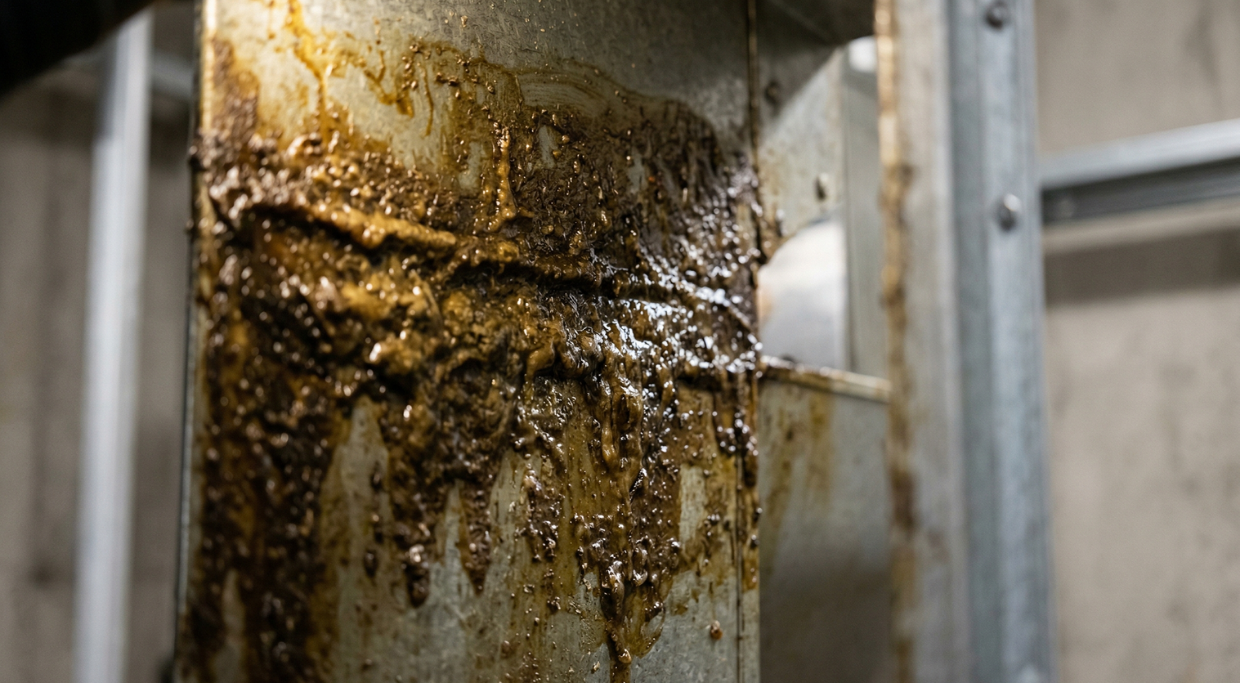
Another confusion point: filters and ducts aren’t the same. A clean filter doesn’t mean clean ducts. Grease bypasses filters and deposits in ductwork. You can change filters weekly and still have a fire hazard in your ducts.
One more: “Hood grease cups” and “floor grease interceptors” are the same thing. They’re not. They sit at different points in the system and require separate maintenance.
Real-World Example: The Restaurant That Almost Burned
A mid-sized Chinese restaurant in Singapore operated for five years with the same exhaust system. The owners cleaned filters monthly and assumed that was enough. Nobody had looked inside the ducts since installation.
One Friday night, the wok station was running hot during service. A small spark from the burner ignited grease deposits deep inside the exhaust duct. Flames traveled through the ductwork toward the roof. The kitchen filled with smoke in seconds.
The fire suppression system activated, dousing the flames, but the kitchen was unusable for a week. The owner lost $50,000 in revenue, faced civil liability questions, and almost lost the restaurant’s operating license when NEA inspectors found years of grease accumulation in the ducts.
The investigation revealed: The ducts hadn’t been professionally cleaned in five years. A $2,000 professional duct cleaning, done annually, would have prevented the entire incident.
What the owner learned: Exhaust maintenance isn’t optional. It’s a safety and compliance requirement that operates on a different schedule than filters.
Understanding Commercial Kitchen Exhaust Systems
Components of a Commercial Kitchen Exhaust
Your exhaust system works as a linear stack. Grease enters at the top (hood) and travels downward through filters, ducts, and traps. Understanding this flow helps you identify where problems accumulate.
The Exhaust Stack (Top to Bottom):
COOKING EQUIPMENT (Wok, Fryer, Griddle)
↓
HOOD (Capture point)
↓
BAFFLE/MESH FILTERS (First grease barrier)
↓
HOOD GREASE CUP (Small separator, catches overflow)
↓
DUCTS (Where grease deposits accumulate invisibly)
↓
FAN/MOTOR (Pulls air through the system)
↓
FLOOR GREASE INTERCEPTOR (Large external trap, final collection)
↓
EXHAUST TO OUTSIDE
Each Component’s Role:
Hood: The capture point directly above cooking equipment. It draws smoke and heat upward into the ductwork. Hoods come in two types (see below).
Baffle Filters (Type I) or Mesh Filters (Type II): Baffle filters are ribbed, metal strips designed to compress flames and grease, preventing them from entering ducts. This is why SCDF requires baffle filters in Type I hoods; they act as a fire barrier, stopping flames from spreading through the ventilation system. Mesh filters catch large particles but allow smaller grease droplets to pass.
Hood Grease Cup: A small removable container mounted under or inside the hood. It catches overflow from filters before grease enters ducts. This is often overlooked but critical, when the cup fills, grease backs up into ducts and accumulates.
Ducts: Rigid or flexible metal pipes that transport exhaust away from the kitchen. This is where the majority of grease deposits accumulate invisibly over months. Ducts create the fire hazard, confined grease buildup with no oxygen restriction becomes fuel.
Fan/Motor: The blower that creates negative pressure, pulling air through the hood and ducts. Grease and dust settle around the motor housing, reducing cooling efficiency and accelerating wear.
Floor Grease Interceptor: A large external trap (usually in the basement or outside) that collects heavy grease flowing through main ducts. This is separate from the hood grease cup. Many operators confuse these two, the cup handles immediate overflow; the interceptor handles bulk grease. Both require maintenance on different schedules.
Type I vs Type II Exhaust Systems
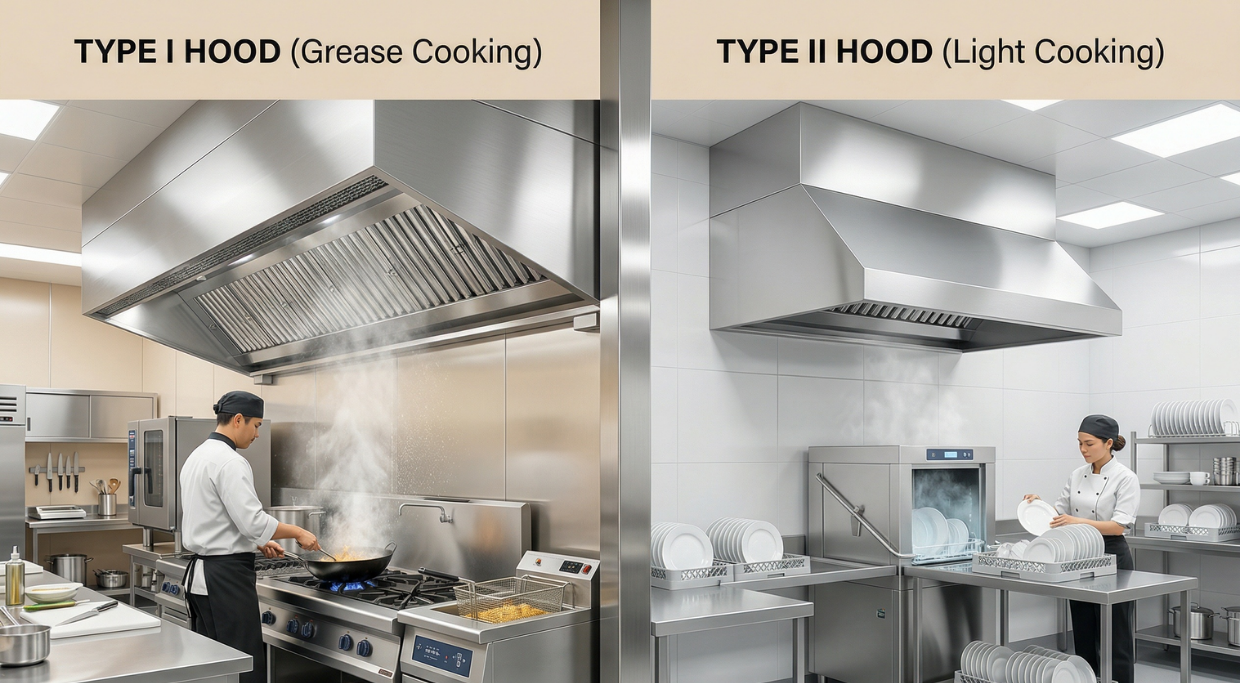
The type of hood you have determines maintenance frequency and cleaning intensity.
Aspect | Type I Hood | Type II Hood |
Purpose | Cooking with grease (wok, fryer, griddle) | Non-grease cooking (prep, steam, dishwashing) |
Grease Production | High (requires filtration) | Low (minimal grease) |
Filter Type | Baffle or mesh grease filters | Simple mesh or no filters |
Cleaning Frequency | Minimum: Monthly | Minimum: Quarterly |
Professional Cleaning | Required annually (or monthly if high-volume) | Required annually |
Fire Risk | Moderate to high | Low |
Duct Inspection | Essential annually | Annual inspection sufficient |
Makeup Air Requirement | Required (system must replace air) | May be required depending on volume |
Which one do you have? Type I hoods always require baffle filters and grease traps. Type II hoods sit over low-heat equipment and may have minimal or no filtration. If you’re unsure, check your equipment documentation or ask your equipment supplier.
How Exhaust Performance Affects Kitchen Operations
Proper airflow removes heat from cooking stations, reducing the burden on air conditioning. This saves energy and keeps your kitchen at workable temperatures during peak service.
Effective exhaust also removes odors, smoke, and cooking fumes. Staff feel more comfortable. Your kitchen doesn’t smell like stale grease at the end of service.
When performance drops (due to filter clogs or duct blockage), everything reverses. Heat builds up. Odors linger. Staff fatigue increases. Energy costs rise because your HVAC system works harder to compensate.
Identifying Signs of Poor Maintenance
Watch for these warnings:
Visible smoke or odors lingering in the kitchen instead of being drawn up through the hood. This signals reduced airflow, either clogged filters or buildup in ducts.
Increased energy consumption without any other changes. A struggling fan works harder to push air through a restricted system.
Grease visible on exterior surfaces of ducts (outside the kitchen), indicating overflow from inside accumulation.
Unusual noises from the fan motor, squeaking or rattling, suggesting strain or bearing wear.
Temperature imbalance at cooking stations, with heat building up near the hood instead of being exhausted.
Practical Guide to Maintaining Your Kitchen Exhaust
Regular Cleaning Schedules
Your maintenance plan follows a layered schedule:
Daily: Wipe down the external hood surfaces and filter face with a damp cloth to remove surface grease before it dries.
Weekly: Remove baffle filters (on Type I hoods) and soak them in hot soapy water. Clean thoroughly. This prevents grease from hardening and blocking airflow. Allow filters to dry completely before reinstalling.
Monthly: Inspect the internal hood surfaces, the area above the filter, and accessible duct sections. Use a flashlight to look for grease buildup. If grease accumulates visibly, it’s time for deeper cleaning.
Quarterly: Have filters professionally cleaned or replaced, depending on your filter type. Some facilities rotate new filters monthly during high-volume periods.
Annually: Hire a certified professional to clean internal ducts, the fan, and the grease trap. This is non-negotiable. Professional cleaning removes grease and deposits you cannot access with standard tools and addresses fire risk properly.
Step-by-Step Cleaning Process

Removing and Cleaning Filters (Weekly)
- Turn off the exhaust fan.
- Locate the filter frame (usually clips or latches hold it in place).
- Carefully remove the filters, grease will drip, so place a tray underneath.
- Soak filters in a sink or basin with hot water and degreasing dish soap for 15–20 minutes.
- Use a soft brush (not steel wool) to scrub both sides gently.
- Rinse thoroughly under running water until water runs clear.
- Stand filters upright to air-dry completely (30–60 minutes).
- Reinstall filters, ensuring they seat properly in the frame.
Never reinstall damp filters, water droplets can cause electrical issues.
Duct and Fan Cleaning (Quarterly/Annually)
This requires professional equipment. Professional cleaners use high-pressure air and water systems to dislodge grease, duct brushes that access interior surfaces, and specialized equipment to inspect ducts for damage or corrosion.
Schedule this with a licensed kitchen exhaust cleaning service. Cost: typically $800–$2,000 annually, depending on duct length and system complexity.
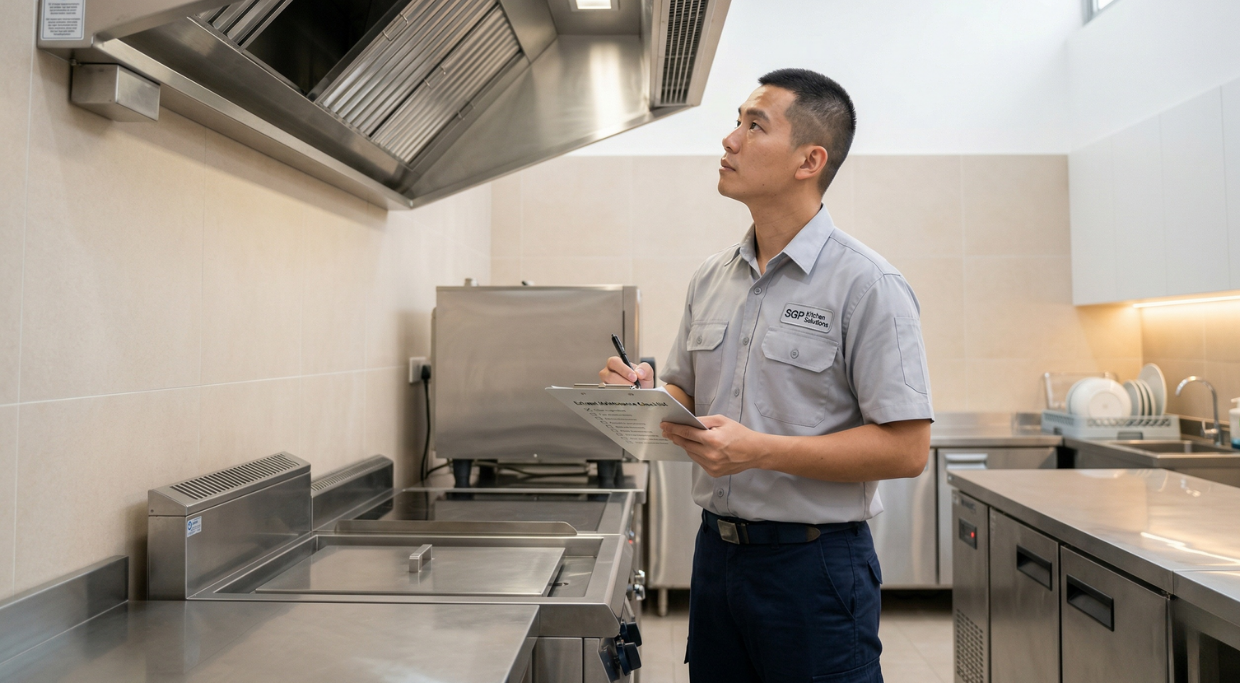
Don’t wait for visible problems, audit your logs today. If your last professional duct cleaning was more than 12 months ago (or 6 months ago for high-volume kitchens), call a certified service this week. SCDF compliance depends on it.
Grease Trap Maintenance (Monthly to Quarterly)
- Locate your grease trap (usually under the hood or in the duct line).
- Check the grease level monthly. When grease fills 75% of the trap, it’s time to empty.
- Allow grease to cool and solidify (several hours).
- Transfer solidified grease into a disposal container (never pour liquid grease down drains).
- Dispose of grease through a licensed grease disposal service, never in your trash or sewer.
- Rinse the trap with hot water and replace the strainer basket.
Overflowing grease traps reduce airflow and create maintenance issues.
Preventive Maintenance Tips
Install quality baffle filters from the start. Baffle filters outperform flat mesh filters because they compress grease and act as fire barriers. The extra cost upfront (roughly 30–50% more) pays dividends in reduced duct accumulation and SCDF compliance.
Monitor airflow visually and audibly. If your exhaust fan sounds strained or runs louder than usual, grease is likely restricting airflow. Don’t ignore this signal.
Use a grease cartridge or secondary collection system. Some installations include a secondary grease cartridge that captures overflow before it enters ducts. This extends time between professional cleanings.
Maintain clear space below the hood. Equipment that sits directly under the hood creates heat zones that accelerate grease buildup. Keep clear space where possible.
Train kitchen staff on filter maintenance. If staff understand why weekly filter cleaning matters, they’re more likely to do it properly. Spend 10 minutes quarterly on this training, it’s an investment in compliance.
Common Mistakes and Lessons Learned
Overlooking duct inspections: Many operators clean filters obsessively but never look inside ducts. Internal buildup happens invisibly. Annual professional inspections catch problems early.
Using improper cleaning chemicals: Never use caustic drain cleaners or acidic degreasers on stainless steel ducts, they cause corrosion. Stick to commercial kitchen degreasers formulated for exhaust systems.
Ignoring fan motor maintenance: The motor is often overlooked. Dust and grease accumulate around the motor housing, reducing cooling and increasing wear. Professional cleaning includes the motor.
Delaying grease trap emptying: An overflowing grease trap backs up into ducts. Clear it before it reaches capacity.
Assuming new equipment is self-maintaining: Even a brand-new exhaust system requires weekly filter cleaning and annual professional servicing. There’s no exception.
When to Seek Professional Help
You need certified professionals when:
- Ducts show internal corrosion or damage (visible from openings).
- Your exhaust system fails to remove smoke or odors after filter cleaning.
- The fan produces unusual noises suggesting bearing wear.
- Grease trap issues persist despite regular emptying.
- It’s been more than 12 months since the last professional cleaning (or more than 6 months for high-volume kitchens).
Professional services include full duct cleaning, fan inspection and maintenance, grease trap pumping, and a written compliance report. Schedule these annually as part of your facility maintenance budget.
Implementing a Sustainable Maintenance Plan
Maintenance Checklist for Commercial Kitchens
Daily Actions:
- [ ] Wipe down external hood surfaces and filter face with damp cloth
- [ ] Visually inspect for any smoke backup or odors
Weekly Actions:
- [ ] Remove baffle filters
- [ ] Soak and clean filters thoroughly
- [ ] Air-dry completely before reinstalling
- [ ] Inspect hood interior for visible grease
- [ ] Document completion (date, time, staff initials)
Monthly Actions:
- [ ] Check grease trap fill level
- [ ] Empty grease trap if 75% full
- [ ] Inspect accessible duct sections with flashlight
- [ ] Test exhaust fan for unusual noises
- [ ] Document findings and any issues
Quarterly Actions:
- [ ] Professional filter replacement or cleaning (if rotating new filters)
- [ ] Full hood and accessible duct inspection
- [ ] Confirm all documentation is current
Annual Actions:
- [ ] Schedule professional duct cleaning and fan servicing
- [ ] Professional grease trap pumping and inspection
- [ ] Request written compliance report from professional service
- [ ] Review maintenance logs and compliance status
- [ ] Verify NEA fire safety standards are met
Documentation for Compliance: Maintain a maintenance log (digital or paper) recording dates, tasks completed, staff responsible, and any issues found. This documentation protects you during fire safety inspections and liability reviews.
Leveraging Resources
SCDF Code of Practice for Fire Safety in Buildings: The definitive source for kitchen exhaust requirements in Singapore. Download at: https://www.scdf.gov.sg (search “Code of Practice”). This document specifies cleaning frequencies and baffle filter requirements.
NEA Environmental Standards: Review for air quality compliance at: https://www.nea.gov.sg
Manufacturer Guidelines: Your hood manufacturer provides detailed cleaning instructions specific to your equipment. Review these annually, many operators ignore them.
Training Staff Safely: Schedule a quarterly 10-minute briefing covering filter removal safety, proper chemical use, grease disposal regulations, and documentation. This prevents damage, injury, and compliance gaps.
Expert Advice
Experienced kitchen operators recommend treating exhaust maintenance as a fixed monthly line item in your budget, not an emergency repair expense. Budget $150–$300 monthly for routine supplies and service ($2,000–$3,600 annually). This beats $50,000+ in fire damage, revenue loss, and regulatory consequences.
Many operators also establish relationships with professional cleaning services, scheduling annual visits on a fixed calendar date (e.g., every January). This removes guesswork and ensures you never miss SCDF compliance windows.
The takeaway: Exhaust maintenance is a compliance issue, not a discretionary expense. Treat it accordingly.
Organizations like Jackie’s Enterprise maintain structured exhaust maintenance schedules, including weekly filter cleaning and annual professional servicing. This approach maximizes system efficiency and ensures compliance with fire safety standards.
Conclusion
Proper exhaust maintenance protects your kitchen from fire hazard, ensures staff comfort, reduces energy costs, and maintains regulatory compliance. It’s not optional, it’s foundational to safe kitchen operations.
The maintenance schedule is straightforward: daily filter wiping, weekly deep filter cleaning, monthly grease trap checks, quarterly professional filter service, and annual professional duct cleaning. Each level prevents problems that cascade into larger issues.
Your action items are clear: Create a maintenance log. Schedule weekly filter cleaning into your staff procedures. Budget $2,000 annually for professional duct cleaning. Train your team on proper techniques. Review NEA fire safety guidelines annually.
Implement this routine now, and your exhaust system will perform reliably for years. Delay, and you’ll eventually face a costly incident that tests your business’s resilience.
Don’t wait for an inspection to discover gaps. Audit your current maintenance logs today. If your last professional duct cleaning was more than 12 months ago, schedule one this week.