

Intoduction
Poor equipment planning often causes many F&B businesses in Singapore to overspend by tens of thousands of dollars on their initial setup. Whether you’re launching a cloud kitchen, opening a café, or equipping a hotel kitchen, today’s equipment choices either set you up for success or create costly headaches later.
Choosing the right commercial kitchen equipment isn’t about following trends. It’s about understanding your specific operational needs, maximizing your budget, and investing in tools that ensure efficiency, safety, and long-term profitability.
To help you make confident choices, this guide walks you through selecting commercial kitchen equipment that matches your menu, fits your space, and meets compliance standards. You’ll learn how to: accurately assess your cooking volume, identify suitable equipment for your menu, maximize your available space, ensure compliance, and avoid common purchasing mistakes. Let’s start by breaking down these key decision points for your operation.
Understanding the Right Equipment Choice: Functionality, Compliance, and ROI
Selecting commercial kitchen equipment goes beyond simply picking appliances—it’s about choosing tools that align with your menu, meet health and safety regulations, and provide strong long-term value.
The right equipment impacts every aspect of kitchen operations. Quality appliances reduce prep times for efficiency during peak hours, ensure food safety through precise temperature controls—especially crucial in Singapore’s climate—and enhance staff productivity to address rising manpower costs.
With the right equipment, you maintain food consistency. Energy-efficient appliances maintain stable temperatures, even in high humidity, ensuring customers enjoy the same quality every visit and fostering lasting trust.
Key Factors to Consider When Choosing Commercial Kitchen Equipment
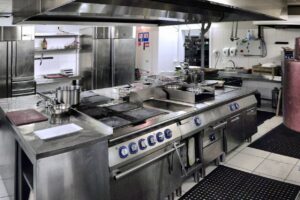
Kitchen Layout & Space Efficiency
Your kitchen layout is foundational to your entire commercial kitchen setup. This is especially true in Singapore, where you pay some of the highest rental rates per square foot globally. Poor space planning doesn’t just create bottlenecks; it also compromises efficiency and productivity. It creates safety hazards and frustrated staff members who are bumping into each other during your dinner rush.
Before purchasing a single piece of equipment, map out your kitchen workflow in accordance with the National Environment Agency requirements. Think through how food moves through your space—from receiving to storage, prep, cooking, plating, and finally to service. Your equipment placement should support this natural flow while meeting all mandatory clearance requirements. For more detailed information, check out our comprehensive guide on planning a commercial kitchen layout.
A small café in a shophouse has completely different needs than a sprawling hotel kitchen. The café may need to prioritize compact, multifunctional equipment, such as a combi oven, which can steam, bake, and roast all in one unit. Meanwhile, the hotel probably needs separate specialty stations to handle high volumes across multiple menus simultaneously.
Measure your space carefully and account for NEA-mandated clearances around equipment. Here’s a common mistake: trying to cram in extra equipment. It rarely improves productivity. Instead, it usually creates chaos and puts you at risk for compliance violations.
Equipment Durability & Quality
When spending tens of thousands on kitchen appliances, durability is crucial. Durable appliances reduce long-term replacement costs. Higher upfront costs often result in significant savings during the first years of operation.
Stainless steel construction is the gold standard for commercial kitchens, particularly crucial in our humid climate. It resists corrosion from constant moisture, withstands high temperatures, cleans easily to meet sanitation standards, and maintains the professional appearance your customers expect. Commercial-grade materials are designed to withstand the intense demands of high-volume cooking, which can quickly destroy residential equipment in just a few months.
Pay close attention to warranties and construction details. Are the refrigerator shelves properly reinforced? Do the oven doors have commercial-grade hinges that can withstand humidity levels? These seemingly small details determine whether your equipment lasts five years or fifteen years in tropical conditions.
Compliance & Energy Efficiency
Compliance isn’t negotiable in Singapore’s strictly regulated food and beverage (F&B) industry. Your equipment must meet:
- Licensing requirements from the National Environment Agency (NEA)
- Food safety standards from the Singapore Food Agency (SFA)
- Fire safety codes from the Singapore Civil Defence Force (SCDF)
- Building regulations from the Building and Construction Authority (BCA)
Your equipment needs appropriate certifications—look for the Singapore Safety Mark or internationally recognized certifications that local authorities accept.
When buying commercial appliances, always verify they meet local standards. Failing to buy code-compliant equipment can result in delayed licensing, hefty fines, or even forced closures—devastating in our competitive market.
Now let’s talk energy efficiency, which directly impacts your bottom line. According to the Energy Market Authority (EMA), electricity tariffs in Singapore average $0.28 to $ 0.32 per kWh. Energy-efficient models may cost 10-30% more upfront but can reduce annual utility bills by 20-40%. For continuously running equipment—such as refrigeration units operating in our 30°C temperatures—these savings add up quickly.
Look for NEA Energy Label ratings where more ticks mean better efficiency. Key takeaway: Energy-efficient equipment, though higher in upfront cost, often pays for itself in reduced utility bills in less than 18 months. Explore available government support to offset your investment costs.
Comparison Guide: Making the Smart Purchase
Making smart purchase decisions requires a systematic comparison of your options. Here’s a practical comparison relevant to Singapore operators:
Gas vs. Electric Equipment
| Initial Cost (SGD) | $4,000-$10,000 | $3,500-$8,500 |
| Operating Cost | Lower (town gas rates favorable) | Higher electricity costs |
| Installation | Requires gas connection, exhaust system | Simpler electrical setup |
| Regulatory Requirements | Stricter ventilation, gas safety checks | Standard electrical compliance |
| Best For | High-volume kitchens, wok cooking | Smaller operations, precise control |
Here are other key comparisons to consider:
New vs. Refurbished Equipment
New equipment provides full warranty coverage and the latest energy ratings—crucial in our climate. You’re looking at SGD $15,000 to $80,000 for a complete kitchen setup. Refurbished equipment from established local dealers can save 30-50% (around SGD $8,000-$45,000) while still meeting current standards. Used equipment is a cost-effective option when budgets are tight, but ensure it meets current compliance requirements.
Convection vs. Combi Ovens
Convection ovens excel at baking and roasting, with prices ranging from SGD $3,000 to $12,000. They work great when you have dedicated equipment space. Combi ovens offer steam, convection, and combination cooking modes in one unit—essential for space-constrained kitchens—but cost between SGD $15,000 and SGD $60,000. Choose combi ovens when operating in expensive locations where every square meter counts.
When researching industrial refrigerators and restaurant ovens, ensure they’re rated for tropical climates with adequate insulation. Walk-in coolers are ideal for central kitchens and hotels, while reach-in units are well-suited for smaller food and beverage (F&B) outlets. For detailed equipment specifications and selection criteria, explore our comprehensive restaurant equipment guide.
Maximizing ROI: The Business Impact of Choosing the Right Commercial Kitchen Equipment
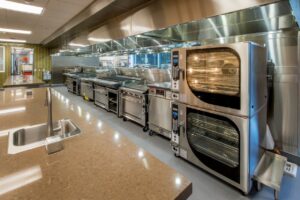
The financial impact of smart equipment decisions extends far beyond the purchase price. Professional kitchen tools that align with your operational needs create real, measurable improvements across multiple business metrics.
Productivity gains directly translate into increased revenue. When your cooking equipment can handle higher volumes without compromising quality, you can serve more customers during peak lunch and dinner rushes. A properly sized combi oven can reduce cooking times by 30%, enabling you to turn tables faster and potentially increase daily revenue by hundreds of dollars.
Cost savings accumulate in multiple ways. Energy-efficient equipment reduces utility bills. Quality equipment lowers repair costs. Consistent cooking minimizes food waste. One restaurant operator calculated that upgrading to commercial-grade refrigeration rated for tropical climates reduced food spoilage losses by SGD $1,200 per month—nearly SGD $14,400 annually. While your results may vary based on your specific operation, this case study illustrates the significant potential impact of selecting the proper equipment.
Customer experience improvements protect your reputation in a market where Google reviews and word-of-mouth determine success. Consistent food quality, enabled by reliable equipment that performs despite climate challenges, builds trust that turns first-time diners into loyal regulars who recommend you to friends.
Key benefits include:
- Improved workflow and staff efficiency (critical given rising labor costs)
- Lower long-term operating costs from energy savings
- Reduced downtime from equipment breakdowns
- Better food quality and consistent safety compliance
- Eligibility for government grants and energy efficiency incentives
Commercial kitchens upgrading to energy-efficient equipment can significantly reduce energy consumption, with potential annual savings of SGD $8,000-$12,000 for medium-sized operations. To maximize these savings, read our guide on energy-efficient appliances for F&B businesses for practical strategies and tips.
Step-by-Step Guide to Selecting Kitchen Equipment
Step 1 – Assess Your Menu & Volume Needs
Start with your menu, not equipment catalogs. List every dish you plan to serve and identify the required cooking methods, including baking, frying, grilling, steaming, wok cooking, and more.
Calculate your realistic volume. How many covers will you handle during your busiest service? What’s your target in six months? In a year? Buy equipment that handles your current peak with room to grow, but avoid overbuying for hypothetical expansion that may never materialize.
Step 2 – Plan Your Kitchen Layout
Create a detailed, scaled floor plan meeting regulatory requirements before purchasing anything. Include walls, doors, utility connections, and mandatory clearances. Many local equipment suppliers offer free layout consultation—leverage this expertise.
Organize your kitchen into logical zones: receiving/storage, preparation, cooking, plating, and sanitation. Your equipment should support smooth movement between these zones without creating cross-contamination risks.
Step 3 – Research Brands & Compare Features
Research reputation among local F&B operators. Check online reviews, talk to other restaurant owners, or network through industry associations. Compare features that matter in tropical climates, such as adequate cooling capacity, humidity-resistant components, and robust ventilation systems.
Request demonstrations at supplier showrooms whenever possible. Hands-on experience reveals how equipment performs under real conditions, which spec sheets can’t provide.
Step 4 – Consider After-Sales Service & Warranty
Equipment will break down eventually. Your supplier relationship determines whether a breakdown means a quick two-hour repair or a devastating three-day revenue loss.
Verify warranty terms carefully. What’s covered? For how long? Is same-day service available for urgent repairs? Are spare parts available locally, or will you wait for them to be shipped from overseas? Inquire about preventive maintenance packages, which are especially essential in our humid climate.
Common Mistakes to Avoid When Choosing Equipment
Buying too much too soon is the biggest mistake. It drains capital needed for rental deposits, staffing costs, or marketing. Start with essentials and add equipment as your business proves the need for it.
Ignoring energy ratings costs money daily. A refrigerator costing SGD $800 less today but using 40% more electricity will cost over SGD $2,000 more over three years. Always calculate the total cost of ownership, not just purchase price.
Overlooking warranties and service plans leaves you vulnerable. The cheapest purchase price often comes from suppliers with limited service capabilities or no local presence. When something breaks at 7 PM on Saturday, you’ll understand why this matters.
Choosing residential-grade equipment instead of commercial-grade equipment violates regulatory requirements and won’t withstand the intensity of commercial use. Common mistakes in buying commercial appliances stem from trying to save money in the wrong places, which can lead to license revocation.
Conclusion
Choosing the right commercial kitchen equipment is one of the most consequential decisions you’ll make as an F&B operator in Singapore. The equipment you select today will influence your daily operations, profitability, team effectiveness, and ultimately, your business’s success for years to come.
By assessing your true needs, prioritizing quality and compliance, systematically comparing options from established suppliers, and avoiding common pitfalls, you’ll make investments that pay dividends in the long term.
Take time with these decisions. Consult experienced operators who’ve been in your position. Leverage local dealers’ expertise who understand Singapore’s unique challenges. Calculate long-term costs, not just sticker prices. Do this right, and your kitchen will run smoothly, your food quality will remain consistently excellent, and you’ll build a thriving food and beverage business.
FAQs About Choosing the Right Commercial Kitchen Equipment

Q1: What equipment is essential for a small restaurant kitchen in Singapore?
Essential equipment includes a commercial range or cooktop, convection or combi oven, commercial refrigerator and freezer rated for tropical climates, stainless steel prep tables, a three-compartment sink, and a commercial dishwasher. Budget around SGD $25,000 to $50,000 for a basic setup. Additional items, such as industrial refrigerators and specialized cooking equipment, depend on your specific menu.
Q2: What is the recommended budget for commercial kitchen equipment in Singapore?
A small café or cloud kitchen typically needs SGD $30,000-$60,000. Full-service restaurants usually need SGD $100,000-$200,000. High-volume operations, such as hotels or large catering facilities, might invest SGD $300,000 or more. Equipment typically represents 20-30% of total setup costs. Include a 15-20% contingency budget for unexpected compliance requirements and climate-specific adaptations.
Q3: Should I buy new or refurbished commercial equipment?
New equipment offers full warranties, latest energy ratings, and guaranteed compliance—ideal for high-use items like refrigeration working against ambient heat. Refurbished equipment from reputable local dealers saves 30-50% and works well for lower-use items. Ensure it comes with a warranty and meets current standards. Verify energy ratings—older equipment may cost more to operate than you save on the purchase price.
Q4: How do I know if equipment is energy-efficient?
Look for the NEA Energy Label, which features 3-4 ticks indicating the most efficient models. Check specifications for tropical climate ratings (capable of operating at 32-35°C ambient temperature). Compare daily energy consumption in kWh and calculate annual costs using local electricity tariffs. Enterprise Singapore and NEA offer grants for energy-efficient commercial equipment—check their websites for current applicable schemes.
Ready to Equip Your Kitchen for Success?
Looking for durable, energy-efficient commercial kitchen equipment that meets local standards and performs reliably in Singapore’s tropical climate? Contact us for a complimentary consultation, where our specialists will help design the ideal kitchen setup tailored to your specific needs.
Contact us today or visit our showroom to experience the equipment in action before making a purchase.