

Why Product Presentation Strongly Influences Meat Sales
The Psychology Behind Food Display
Visual presentation directly affects purchasing decisions. Bright, even lighting and clear visibility make meat appear fresher. Color contrast signals quality. Professional displays signal food safety and competence.
Why Fresh Meat Presentation Is Critical in Deli and Butchery Shops
Meat quality alone doesn’t drive sales; visibility does. Poor display visibility directly reduces sales per square foot and customer confidence. Display equipment that fails at temperature and humidity control harms both product quality and sales performance.
The Connection Between Display Quality and Customer Trust
Professional refrigeration equipment signals competence. Clean glass, organized layouts, and proper lighting create customer confidence in food safety standards. A worn or poorly maintained display undermines trust.
What a Meat Display Chiller Does and Why It Matters
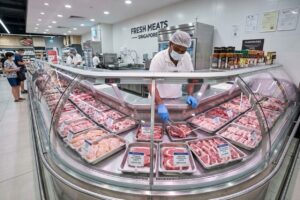
Maintaining Safe Temperature for Fresh Meat
Display chillers maintain 0-4°C, slowing bacterial growth. Precision controls prevent temperature fluctuations that accelerate spoilage and create food safety risks.
Preserving Meat Color and Texture
Temperature stability preserves myoglobin (red pigment). Humidity management (85-95% RH) prevents moisture loss and surface oxidation that turn meat gray.
Preventing Bacterial Growth and Spoilage
Consistent cold storage is the primary defense against pathogens. Quality chillers maintaining stable temperatures reduce spoilage losses significantly.
Creating a Clean and Professional Product Presentation
Anti-fog glass, bright lighting, and organized shelving create customer confidence in cleanliness and professionalism.
The Role of Refrigeration in Meat Quality Preservation
Optimal Temperature Ranges for Meat Storage
Fresh red meat requires 0-4°C; processed meats can tolerate up to 5°C. Digital thermostats help staff catch temperature drift before product is affected.
Humidity Control and Moisture Retention
Humidity of 85-95% prevents desiccation without promoting bacterial growth. Low humidity dries meat and changes color; excess humidity promotes microbial growth.
Airflow and Cooling Distribution
Proper airflow ensures uniform temperature across displayed items. Poor airflow creates temperature pockets and condensation buildup.
Why Inconsistent Cooling Affects Product Quality
Temperature swings of 1-2°C weekly reduce shelf life by 30-40%, degrading texture through ice crystal formation and cellular damage.
Types of Meat Display Chillers Used in Retail Environments
| Chiller Type | Best For | Key Advantage | Consideration |
| Serve-Over | Traditional butcher counters, direct staff service | Staff control over portions and presentation | Requires trained staff; higher labor intensity |
| Self-Service | Supermarkets, high-volume retailers | Customer access; reduced staff time | Requires frequent restocking; limited customization |
| Curved Glass | Premium delis, upscale butcheries | Superior product visibility; eye-catching design | Higher cost; more complex cleaning |
| Multi-Deck | High-volume retail, warehouse-style stores | Maximum capacity; multiple product categories | Large floor space needed; complex temperature zones |
Serve-Over Meat Display Chillers
Traditional butcher counters place meat behind glass with staff on the customer side. This maximizes staff control and enables real-time customer service and recommendations. Works best when trained staff is available.
Self-Service Display Chillers
Used in supermarkets, these let customers select pre-packaged meat directly. They reduce labor but require frequent restocking and excellent visibility since customers make quick decisions without guidance.
Curved Glass Display Chillers
Curved front glass maximizes visibility from wider angles, making meat visible from further away. Premium option used in specialty butcheries; more expensive and requires careful cleaning.
Multi-Deck Refrigerated Display Cases
High-volume retailers use multi-deck units with 2-4 shelves, each with independent temperature control. These maximize floor-space efficiency but require complex management.
Key Design Features That Influence Sales
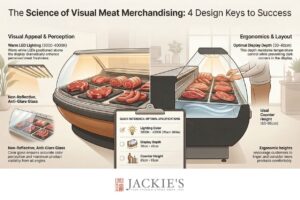
Glass Design and Product Visibility
Clear, non-reflective glass with anti-glare ensures accurate color perception. Curved glass extends visibility angles; flat glass simplifies cleaning.
Lighting That Enhances Meat Appearance
LED lighting positioned above the display dramatically affects perceived freshness. Warm white LEDs (3000-4000K) complement meat color better than cool or fluorescent lighting.
Display Depth and Product Arrangement
Optimal depth of 30-40cm allows visibility to the back while maintaining temperature control. Shallow displays encourage restocking; overly deep displays create dark corners.
Ergonomic Counter Height for Customer Interaction
Counter height of 85-95cm allows comfortable viewing, encouraging customers to linger and consider more products.
How Visual Merchandising Affects Butchery Sales
Creating a Clean and Organized Product Layout
Organized displays increase perceived freshness. Grouping by cut type, removing discolored items, and clearing clutter immediately signal competence.
Using Color Contrast to Highlight Fresh Cuts
Position premium cuts where lighting enhances color. Premium steaks appear more appealing next to contrasting pale colors, drawing the eye upward.
Strategic Product Placement to Encourage Upselling
Place premium cuts at eye level for maximum visibility. Entry-level products occupy lower shelves, naturally directing attention to higher-value items.
Maintaining Consistent Display Replenishment
Displays should never fully deplete. Frequent (every 2-4 hours) restocking maintains full, fresh-looking displays even during high-traffic periods.
Technical Features to Look for in a Meat Display Chiller
Temperature Stability and Digital Controls
Digital thermostats with ±1°C accuracy prevent harmful fluctuations. Alarm systems alert staff to temperature drift before product spoils.
Energy Efficiency and Compressor Performance
Variable-speed compressors consume 20-30% less energy than fixed-speed units while maintaining more stable temperatures, reducing operating costs.
Anti-Fog Glass Systems
Condensation obscures visibility. Heated glass edges or humidity management maintain clarity and enhance perception of product freshness.
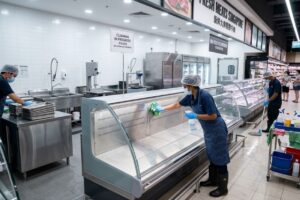
Easy Cleaning and Hygiene Design
Removable, dishwasher-safe shelving and smooth surfaces reduce cleaning time and contamination risk. Poor cleaning design leads to odor and bacteria buildup.
Durability in High-Traffic Retail Environments
Commercial-grade components last 10-15 years. Budget equipment often fails within 5-7 years, making quality equipment better value long-term.
Store Layout Considerations When Installing Display Chillers
Customer Traffic Flow
Position displays where customers naturally pause. Open sight lines and comfortable access encourage lingering and purchasing.
Product Visibility From Entrance Areas
Customers should see the meat display within 5-10 seconds of entering. Strategic placement near entrances increases impulse purchases.
Efficient Staff Access Behind the Counter
Staff must restock quickly without contorting. Poor ergonomics slow operations and increase errors.
Integration With Other Refrigeration Systems
Position near (not directly adjacent to) other refrigeration units for efficient infrastructure while preventing temperature interference.
Common Mistakes Retailers Make When Choosing Display Chillers
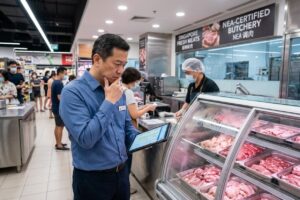
Choosing Units That Are Too Small for Product Volume
Undersized displays force overstocking, reducing visibility and temperature control. Purchasing 10-15% larger units pays for itself through increased sales visibility and reduced spoilage.
Ignoring Lighting and Display Visibility
Many retailers focus on temperature but neglect lighting. Poor lighting is a top customer complaint. Budget units often require expensive retrofits.
Overcrowding the Display Area
Packing meat tightly prevents visibility and reduces air circulation. Displays should be 70-80% full, signaling freshness and availability.
Prioritizing Price Over Refrigeration Performance
Cheap units become expensive long-term. Frequent failures, temperature instability, and high energy costs multiply. Mid-range to premium units offer better 5-10 year value.
How Equipment Selection Supports Long-Term Retail Success
Balancing Product Visibility With Food Safety
Quality display chillers maintain strict temperature control while maximizing visibility through optimal glass design, lighting, and airflow.
Designing Displays That Encourage Customer Confidence
Every technical feature, from anti-fog glass to digital controls, signals serious food safety standards, influencing purchasing decisions.
Commercial Kitchen and Retail Equipment Providers
Equipment providers such as Jackie’s Enterprises work with food businesses to evaluate refrigeration requirements and store layout before selecting display chillers. Professional guidance prevents oversizing, undersizing, or selecting inappropriate equipment.
Practical Checklist Before Buying a Meat Display Chiller
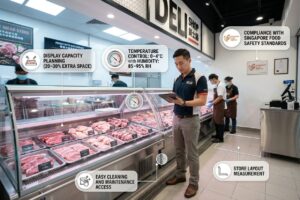
Determine Display Capacity Needs
Calculate the volume of meat you display daily. Plan for 20-30% headroom to accommodate seasonal peaks and promotional events.
Evaluate Store Layout and Counter Space
Measure available counter space and traffic patterns. Ensure the unit fits both spatially and functionally within your layout.
Confirm Temperature and Humidity Control Capabilities
Verify that the chiller maintains 0-4°C reliably and offers humidity control (85-95% RH). Ask for third-party performance data, not just manufacturer claims.
Consider Maintenance and Cleaning Requirements
Evaluate ease of component removal, drain access, and cleaning design. Factor maintenance time into labor costs.
Ensure Compliance With Food Safety Standards
Verify compliance with local food safety regulations (SFA in Singapore, equivalent agencies elsewhere). Request documentation of certifications and past inspection records.
Conclusion
Meat display chillers serve a dual purpose: preserving product freshness while presenting meat to encourage purchases. Understanding how refrigeration, visual merchandising, and store layout interact helps retailers select equipment that supports both food safety and sales. Proper selection creates an efficient, trustworthy retail environment where customers feel confident purchasing quality meat.